
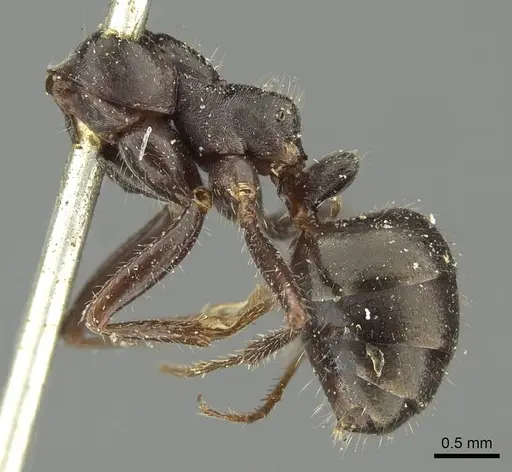
Alloformica aberrans
- Sci. Name
- Alloformica aberrans
- Tribe
- Formicini
- Subfamily
- Formicinae
- Author
- Mayr, 1877
- Distribution
- Found in 1 countries
Introduction
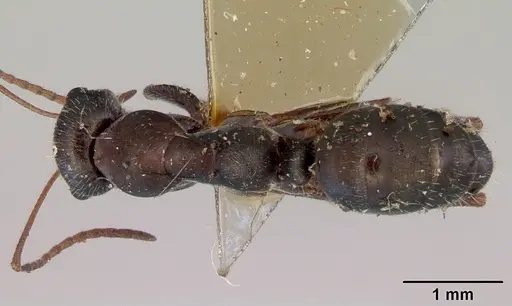
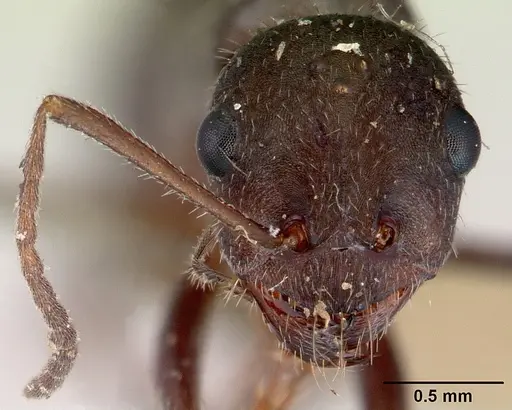
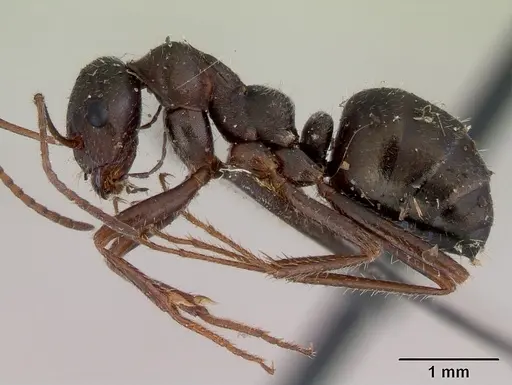
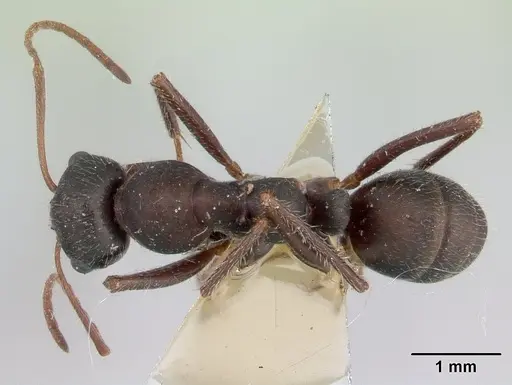
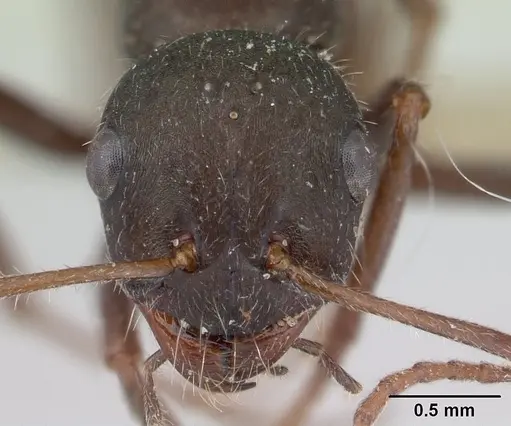
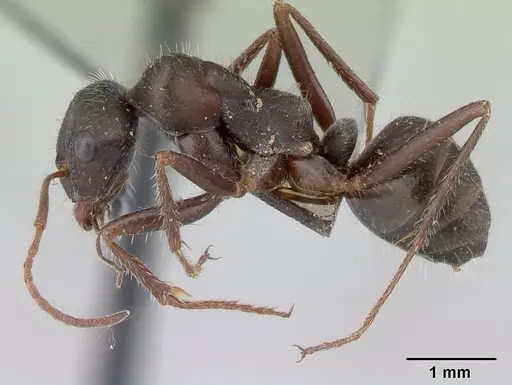
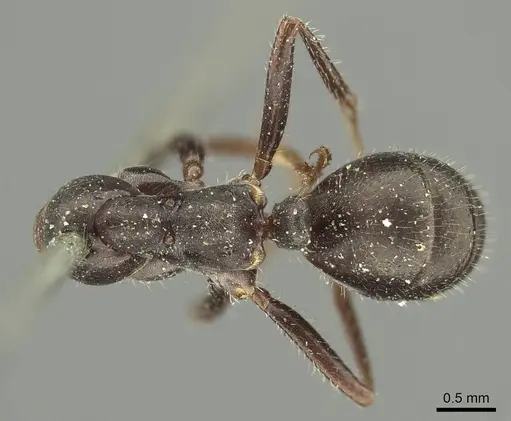
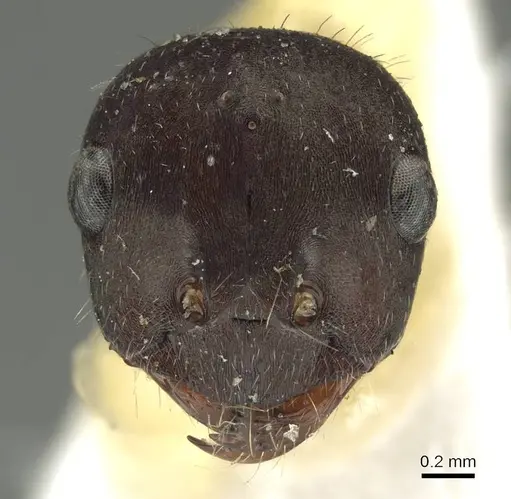
Alloformica aberrans is a small ant native to the mountain steppes of Central Asia. Workers weigh approximately 1.77 mg dry weight, and colonies typically contain 100 to 200 workers with a single queen . They inhabit sparse, low-vegetation steppes in Kazakhstan, Turkmenistan, and Uzbekistan . This species has an unusual reproductive strategy. Unlike most ants, they do not have nuptial flights where queens fly out to mate. Instead, winged males and females develop in the nest by late May (up to 10 per nest), but mating occurs inside the nest and they never leave for a mating flight . New colonies form only when an existing colony splits in two through sociotomy - the original queen stays in the parent nest while workers, brood, and new queens establish a new colony nearby . This means you cannot start a colony from a single queen.
Quick Summary
- Difficulty: Expert
- Origin & Habitat: Mountain steppes with sparse, low vegetation in Kazakhstan, Turkmenistan, and Uzbekistan [1][2]
- Colony Type: Single-queen colonies with 100-200 workers, expanding to 300 workers with up to 10 queens temporarily before division [1]
- Size & Growth:
- Antkeeping:
- Temperature: moderate room temperature around 20-25°C with winter cooling for diapause. Their Central Asian steppe habitat suggests they tolerate warm days and cool nights [1].
- Humidity: moderate humidity. Their steppe habitat and deep nesting (45-50 cm) suggest they prefer stable, moderate moisture rather than tropical humidity. Keep the nest slightly damp but not wet [1].
- Diapause: likely required (temperate steppe climate). Provide winter cooling from November to February at 5-10°C.
- Nesting: Deep vertical tunnels reaching 45-50 cm depth, approximately 1 cm in diameter, with sectional construction and no distinct chambers. Horizontal side branches up to 5 cm may occur [1].
- Behavior: Solitary scavengers that forage alone without recruitment trails. Workers hunt individually in grass (hortobionts) and close the nest entrance at night [1]. They are not aggressive and show no mobilization behavior when food is found [1]. Their small size means escape prevention must be excellent. As Formicinae, they can spray formic acid as a defense mechanism.
- Common Issues: cannot be founded from a single queen, you must obtain a colony fragment with workers and brood, making them extremely difficult to acquire., require very deep nesting space (45-50 cm) which is difficult to replicate in standard formicaria., solitary foraging means they may not locate food in outworlds without direct placement on the substrate., tiny worker size means they can escape through the smallest gaps in mesh or lids.
Colony Founding and Reproduction
Alloformica aberrans does not follow the typical ant life cycle of nuptial flights and independent colony founding. Instead, they practice sociotomy, colony reproduction by division [1].
Winged males and females develop in the nest by late May, with up to 10 winged individuals present in a single nest. However, they never leave for a mating flight. Instead, mating occurs inside the nest [1]. When the colony grows large enough (up to 300 workers), it prepares to divide. At this point, the colony may temporarily hold up to 10 queens [1].
During division, the colony splits into two groups. The old queen remains in the original nest, while a group of workers, brood, and new queens leaves to establish a new nest nearby [1]. This means you cannot start a colony by catching a single queen and waiting for her to raise workers. You must collect an existing colony fragment that already contains workers, brood, and at least one queen.
Nest Architecture and Housing
In nature, Alloformica aberrans builds deep, simple nests. The main tunnel runs vertically or at an angle,1 cm in diameter, and reaches 45-50 cm deep into the soil [1]. The tunnel widens slightly at the end but does not form distinct chambers. Short horizontal side branches up to 5 cm long may extend from the main shaft [1].
At night, workers close and camouflage the nest entrance [1]. This suggests they prefer secure, enclosed spaces and may benefit from a darkened nest area in captivity.
Replicating this in captivity is challenging. Standard test tubes or shallow formicaria will not suffice. You need a setup that provides at least 30-50 cm of vertical nesting depth. A tall cylinder filled with plaster or a deep naturalistic setup with a clay or soil core would be necessary. The nest material should allow for a simple tunnel structure without large open chambers.
Feeding and Foraging Behavior
These ants are zoonecrophages, scavengers that eat dead animals [1]. Workers forage alone as solitary hunters in grass (hortobionts) and do not recruit nestmates to food sources [3]. There is no trail formation or tandem running.
In captivity, offer dead insects rather than live prey. Small dead insects like fruit flies, pinhead crickets, or pieces of mealworm are appropriate. Because they do not recruit, place food directly near nest entrances or in multiple locations so individual workers can find it. They may also accept sugar water or honeydew substitutes, though this is not documented in the wild.
Check that food is being consumed by individual workers rather than expecting group feeding behavior. Remove uneaten food promptly to prevent mold in their moderate-humidity nest environment.
Seasonal Care and Temperature
Alloformica aberrans inhabits mountain steppes in Central Asia, experiencing hot summers and cold winters [1]. While specific temperature requirements are not documented, they likely need a period of winter rest (diapause).
Keep colonies at moderate room temperature (20-25°C) during the active season from March to October. Provide a gradient if possible, with one side slightly warmer. From November to February, cool the colony to 5-10°C to simulate winter. This cooling period likely triggers the development of winged reproductives in spring.
Because they nest deep in the wild (45-50 cm), they experience stable temperatures and humidity. Avoid placing nests in locations with rapid temperature fluctuations or direct sunlight heating.
Frequently Asked Questions
Can I start Alloformica aberrans from a single queen?
No. Alloformica aberrans does not have independent colony founding. New colonies form only by division of existing colonies (sociotomy), where a group of workers, brood, and queens splits from the parent nest [1]. You must obtain a colony fragment with workers already present.
How do Alloformica aberrans colonies reproduce?
They reproduce by colony division. When a colony reaches about 300 workers, it splits into two groups. The original queen stays in the nest, while workers, brood, and new queens leave to found a new colony [1]. Winged reproductives mate inside the nest in late May, and there are no nuptial flights [1].
What is the best nest type for Alloformica aberrans?
They need very deep vertical space, at least 30-50 cm, to replicate their natural tunnels which reach 45-50 cm deep [1]. Standard horizontal formicaria or test tubes are unsuitable. Use a tall vertical setup with plaster, clay, or soil that allows them to construct a narrow (1 cm diameter) tunnel without large chambers [1].
What do Alloformica aberrans eat?
They are scavengers that eat dead insects (zoonecrophages) [1]. Offer small dead prey like fruit flies or pieces of mealworm. They forage solitarily and do not recruit nestmates, so place food near the nest entrance where individual workers can find it [1].
Do Alloformica aberrans need hibernation?
Likely yes. They come from temperate Central Asian steppes with cold winters [1]. Cool them to 5-10°C for 2-3 months during winter to maintain their natural cycle, though this has not been explicitly documented in captive studies.
Can I keep multiple Alloformica aberrans queens together?
Not recommended. While colonies may temporarily contain up to 10 queens before division, this is a pre-division state, not stable polygyny [1]. They are considered obligate monogynous (single-queen) outside of this temporary phase [4]. Combining unrelated queens will likely result in fighting.
Are Alloformica aberrans good for beginners?
No. They are expert-level ants due to their specialized colony founding method (requiring colony division rather than single-queen founding), need for very deep nesting space (45-50 cm), and rarity in the hobby [1].
How big do Alloformica aberrans colonies get?
Colonies typically contain 100-200 workers with one queen, but can expand to 300 workers with up to 10 queens temporarily present before the colony divides [1].
Why aren't my Alloformica aberrans finding food in the outworld?
They are solitary foragers that do not use recruitment trails [1]. Workers hunt alone and do not lead nestmates to food. Place food directly near their nest entrance rather than expecting them to forage across a large outworld.
Report an Issue
The current care sheet is based fully on literature. See inconsistencies, or something that's incorrect? Please , it will be resolved after review from an admin. Contributing to the blogs tab also helps providing information, to make us be able to further improve the caresheets. Thank you for your support!
References

This caresheet is licensed under CC BY-SA 4.0 .
Community Blogs
Literature
Loading distribution map...Loading products...