
Aretidris buenaventei
- Sci. Name
- Aretidris buenaventei
- Tribe
- Crematogastrini
- Subfamily
- Myrmicinae
- Author
- General, 2015
- Distribution
- Found in 1 countries
Introduction
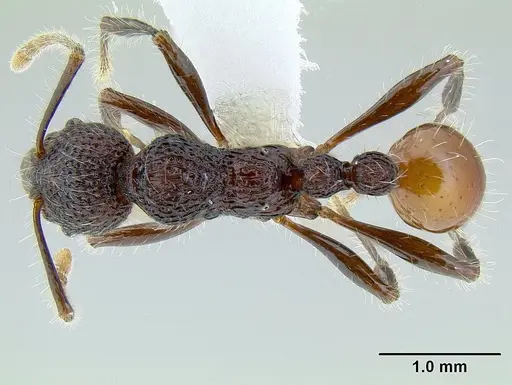
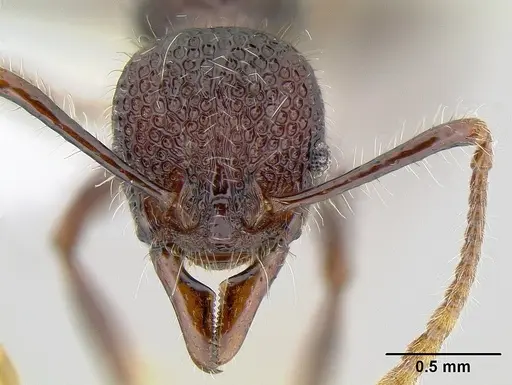
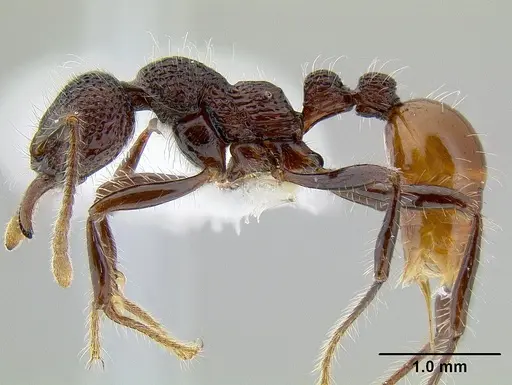
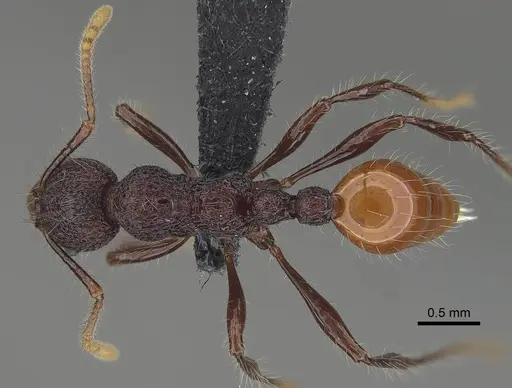
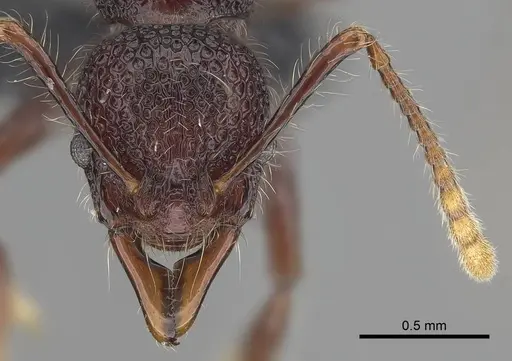
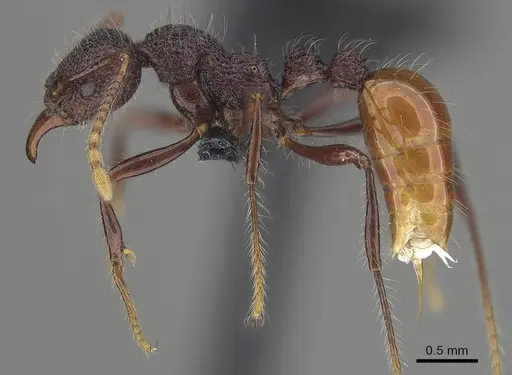
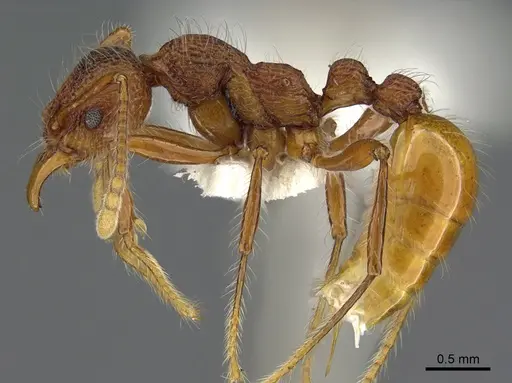
Aretidris buenaventei is a robust ant species from the mountains of Luzon Island, Philippines. Workers measure approximately 5.3-5.7mm in total length and have heavily textured bodies - their head and thorax are deeply pitted (alveolate) with superimposed ridges (rugae), while the gaster remains smooth . They inhabit primary upper montane forest at around 1,436 meters elevation . Researchers discovered the species in 2010 when they found a nest inside a rotten log on the forest floor, with foragers collected from nearby leaf litter in the late afternoon . Only workers have ever been described - no queens or males are known to science . As a member of the tribe Crematogastrini, they possess a modified stinger capable of smearing venom onto attackers rather than piercing flesh [AntWiki].
Quick Summary
- Difficulty: Expert
- Origin & Habitat: Luzon Island, Philippines, primary upper montane forest at 1,436m elevation [1]
- Colony Type: Unknown, only the worker caste has been described [1]
- Size & Growth:
- Antkeeping:
- Temperature: Likely cool and stable based on montane origin at 1,436m, start around 20-22°C and observe [1]
- Humidity: High humidity likely needed given forest floor habitat in montane forest, keep nest substrate damp but not waterlogged [1]
- Diapause: Unknown, likely active year-round given tropical montane location [1]
- Nesting: In nature they nest in rotten logs [1]. A naturalistic setup with rotting wood, or a Y-tong (AAC) nest with rough textures, may work best.
- Behavior: Temperament is unknown. The heavily armored exoskeleton suggests a robust, slow-moving species [1]. They possess a smear-type defense mechanism common to Crematogastrini ants, using a flattened stinger to wipe venom onto enemies [2]. Escape risk is moderate due to their 5mm+ size.
- Common Issues: only workers are known to science, meaning you can only keep wild-caught colonies, founding a new colony from a queen is currently impossible., montane origin at 1,436m suggests they need cooler temperatures than lowland tropical species, heat may kill them., heavy body sculpturing may indicate specific humidity needs, desiccation is a risk if kept too dry., extremely rare in the hobby, finding a healthy wild colony is difficult.
Discovery and Natural History
Researchers discovered Aretidris buenaventei in January 2010 on Mount Palali in the Philippines [1]. They found the nest inside a rotten log lying on the forest floor at 1,436 meters above sea level [1]. The surrounding habitat is primary upper montane forest, meaning cool, wet conditions with plenty of decaying wood [1]. Workers forage in the leaf litter nearby, suggesting they are ground-dwelling generalists [1]. The species belongs to the tribe Crematogastrini, which includes many wood-nesting ants, but this genus was only described in 2015 and remains poorly understood [1][2].
Housing and Nest Setup
In nature these ants choose rotten wood, so replicate this in captivity. Use a naturalistic setup with pieces of decaying wood, or a Y-tong (aerated concrete) nest that mimics the porous texture of rotting logs [1]. The nest material should hold moisture well. Provide tight-fitting chambers scaled to their 5mm+ body size, they are not tiny ants, but they may appreciate narrow spaces that feel secure. Because they come from humid montane forests, maintain damp conditions in the nest area [1]. Avoid dry setups.
Temperature and Environment
Based on their collection at 1,436m in montane forest, these ants likely prefer cooler temperatures than ants from the hot lowlands [1]. Start with temperatures around 20-22°C and watch the colony's activity levels. If workers move slowly or cluster, they may need slightly more warmth, if they appear stressed or die off, reduce heat immediately. Montane species often require stable conditions without big daily temperature swings. We do not know if they need a winter rest period (diapause), but given the tropical location, they may remain active year-round at reduced temperatures [1].
Feeding and Diet
We have no specific data on what Aretidris buenaventei eats. Researchers collected foragers from leaf litter, suggesting they scavenge or hunt small prey on the forest floor [1]. Offer a varied diet including small insects, sugar water, and protein sources like mealworm pieces. Watch what they accept and remove uneaten food promptly to prevent mold in the humid conditions they prefer. Because they are relatively large workers (over 5mm), they can handle prey items bigger than tiny micro-ants can manage [1].
The Missing Queen Problem
Only workers of this species have ever been found and described [1]. No queens, males, or even eggs and larvae have been documented in the scientific literature. This means we do not know what the queen looks like, how colonies start, or whether they are monogyne (single queen) or polygyne (multiple queens) [1]. For keepers, this creates a major challenge: you cannot start a colony from a single queen. You must collect an entire wild colony with workers and brood (if you can find eggs/larvae), or hope to find a queen during a nuptial flight that science has not yet documented. This makes the species extremely difficult to acquire and establish in captivity [1][2].
Identification and Appearance
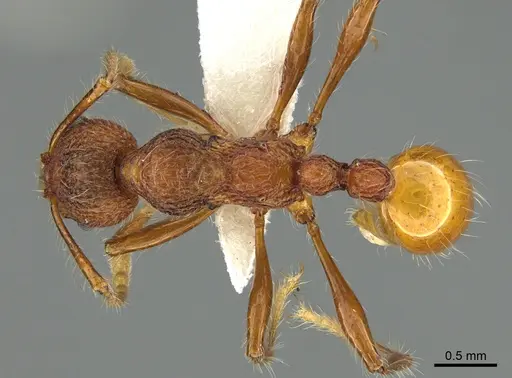
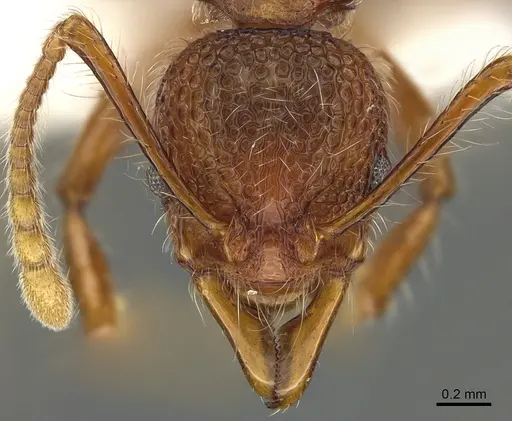
You can recognize these ants by their rugged, armored look. Workers have heavily sculptured heads and thoraxes covered in small pits (alveolate) with ridges (rugae) on top, while their gaster remains smooth [1]. The first segment of the gaster makes up slightly less than half the total gaster length [1]. They have erect hairs on the head and thorax, and their body length ranges from 5.28 to 5.74mm [1]. This heavy sculpturing distinguishes them from similar-sized ants in the region [1].
Frequently Asked Questions
Can I keep Aretidris buenaventei in a test tube?
You should not attempt to found this species in a test tube because no queens have ever been described. Only workers are known to science. If you somehow acquire workers, house them in a small naturalistic setup or Y-tong nest that mimics their rotten wood habitat, not a standard test tube [1].
How long until Aretidris buenaventei gets their first workers?
The egg-to-worker timeline is completely unknown for this species. Since no queens have been documented, we have no data on colony founding or development speed [1].
What do Aretidris buenaventei eat?
Their diet is unconfirmed, but they forage in leaf litter suggesting they are generalist scavengers or predators. Offer small insects, sugar water, and protein sources, then observe what they accept [1].
Do Aretidris buenaventei need hibernation?
It is unknown whether they need a winter rest period. They come from tropical montane forest where temperatures stay moderate year-round, so they may simply slow down in cooler months without a true hibernation [1].
Are Aretidris buenaventei good for beginners?
No. This is an expert-level species because only workers are known (making colony founding impossible), they are extremely rare in collections, and their montane habitat suggests specific temperature and humidity needs that are difficult to meet [1].
How big do Aretidris buenaventei colonies get?
Colony size is unknown. The type series included 23 workers from one nest, but this gives no indication of maximum colony size [1].
Where can I buy Aretidris buenaventei?
You likely cannot buy them. This species is extremely rare in the hobby. You would need to collect a wild colony yourself from Luzon Island, Philippines, which requires permits and knowledge of their specific habitat at 1,400m elevation [1].
How do I identify Aretidris buenaventei?
Look for the heavily sculptured, pitted head and thorax with ridges, contrasting with a smooth gaster. Workers are 5.3-5.7mm long with erect hairs on the head and thorax [1].
What temperature do Aretidris buenaventei need?
Start around 20-22°C based on their montane forest origin at 1,436m. They likely need cooler, stable conditions than lowland tropical ants. Avoid high heat [1].
Can I keep multiple Aretidris buenaventei queens together?
This is unknown and not recommended. Since no queens have ever been described, we do not know if they are monogyne (single queen) or polygyne (multiple queens). Combining queens would be experimental and likely result in fighting [1].
Report an Issue
The current care sheet is based fully on literature. See inconsistencies, or something that's incorrect? Please , it will be resolved after review from an admin. Contributing to the blogs tab also helps providing information, to make us be able to further improve the caresheets. Thank you for your support!
References

This caresheet is licensed under CC BY-SA 4.0 .
Community Blogs
Literature
Loading distribution map...Loading products...