
Feroponera ferox
- Sci. Name
- Feroponera ferox
- Tribe
- Ponerini
- Subfamily
- Ponerinae
- Author
- Bolton & Fisher, 2008
- Distribution
- Found in 1 countries
Introduction
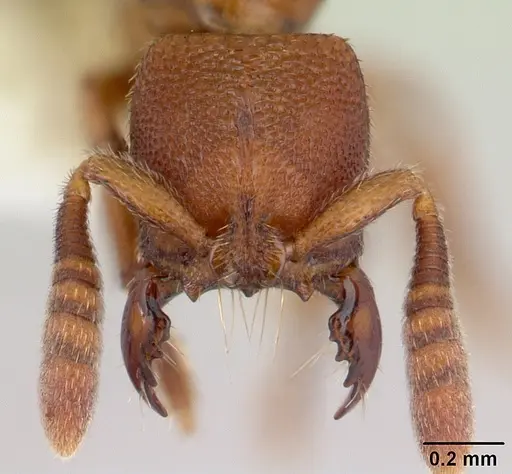
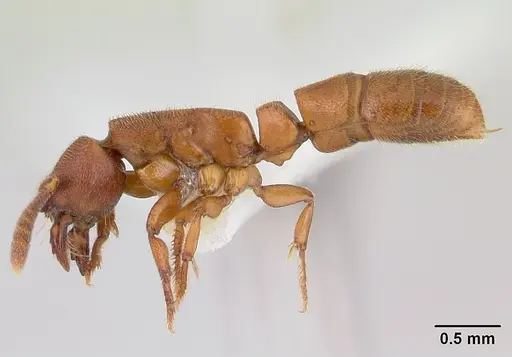
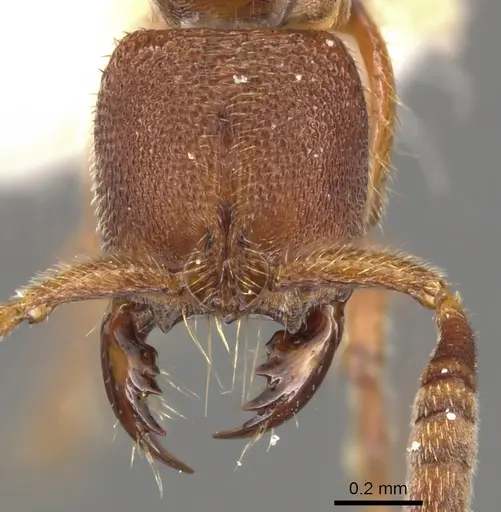
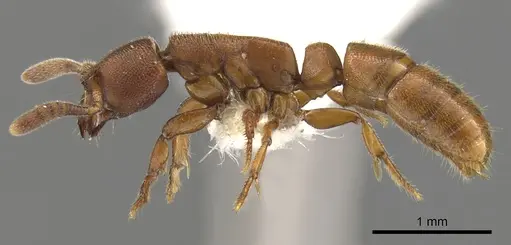
Feroponera ferox is a small, rare ponerine ant from Cameroon, measuring 3.5-3.8mm in total length. Workers are completely blind with no eyes, and have distinctive features including a 4-segmented antenna club, short stout mandibles with 5 teeth, and unique clypeal teeth that project forward over the mandible bases. The genus Feroponera is monotypic, meaning this is the only species in its genus. These ants were discovered nesting in an abandoned termite mound (termitary) of Cubitermes, though they are not confirmed to be termite-eaters. Their highly modified mandibles and clypeal structure suggest a specialized carnivorous diet. Only the worker caste has been described - queens and males remain unknown in science [AntWiki].
Quick Summary
- Difficulty: Expert
- Origin & Habitat: Cameroon, Afrotropical region. Found in the Ndupe area, nesting in abandoned termite mounds (Cubitermes termitaries) [1][2][3].
- Colony Type: Unknown, only workers have been collected. Queen caste and reproductive biology have not been documented. Colony structure (monogyne vs polygyne) is unconfirmed.
- Size & Growth:
- Queen: Unknown, queen caste has not been described [1].
- Worker: 3.5-3.8mm total length [1].
- Colony: Unknown, only 5 workers have ever been collected [1].
- Growth: Unknown, insufficient data to determine growth rate.
- Development: Unknown, no development data exists for this species. (This is one of the most poorly studied ant species in captivity. No information exists on founding, development, or colony growth.)
- Antkeeping:
- Temperature: Unknown for this species. Based on Cameroon location (central Africa), likely need warm, humid conditions in the low-to-mid 20s°C range. Start around 24-26°C and monitor colony activity.
- Humidity: Unknown, found in abandoned termite mounds suggests they prefer humid, sheltered conditions. Keep nest substrate moist but not waterlogged.
- Diapause: Unknown, Cameroon is tropical with minimal temperature variation. Likely no true diapause, but may have reduced activity during dry seasons.
- Nesting: Found in abandoned Cubitermes termitaries, these are mound-building termites that create complex underground structures. In captivity, a naturalistic setup with soil and small chambers would likely work. Y-tong or plaster nests with tight chambers may also be suitable. Avoid dry conditions.
- Behavior: Ponerine ants are typically predatory with potent stings. The specialized mandibles suggest they are active hunters, likely of small invertebrates. Being eyeless, they probably rely on vibration and chemical cues for hunting. Escape risk is moderate given their small size, use standard barriers. Temperament is unknown but most ponerines will sting if threatened.
- Common Issues: extreme rarity, virtually impossible to acquire for hobbyists., no established care protocols, everything would be experimental., queen and male biology completely unknown., unknown founding behavior makes captive propagation nearly impossible., prey requirements unclear, likely need small live prey but specifics unknown.
Species Discovery and Rarity
Feroponera ferox was only described in 2008 by Bolton and Fisher, making it a relatively recent addition to ant taxonomy. The entire known species knowledge comes from just 5 workers collected in Cameroon, the holotype and 4 paratypes. This is a monotypic genus, meaning F. ferox is the sole species in its genus. The ants were collected from an abandoned termite mound of Cubitermes in November 1990 during a termite survey. Prior to formal description, they were recorded in 1996 as an undescribed species near silvestrii. For antkeepers, this species is essentially unavailable and would be extremely difficult to acquire even if colonies were discovered. [1][2]
Unique Morphology
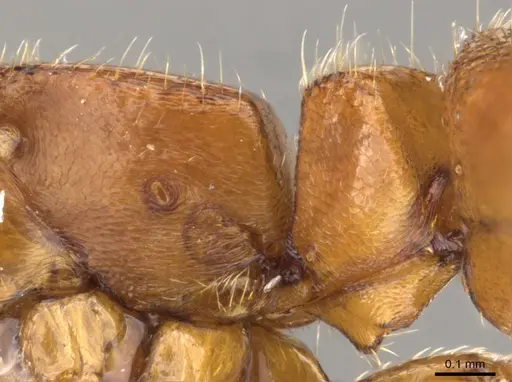
Workers have several distinctive features that set them apart from other African ponerines. They are completely eyeless, which is unusual among ants. Their antennae have 12 segments with a conspicuous 4-segmented club that is longer than the scape itself. The mandibles are short, stout, and subtriangular with 5 teeth, the apical tooth is the largest, curved and acute, and crosses over the opposing mandible when closed. Most remarkably, they have clypeal teeth on each side of the anterior clypeal margin that project forward over the basal margins of closed mandibles, a feature shared only with the much larger Dinoponera genus. They also have distinctive spiniform traction setae on their mesotibia and basitarsi, which likely help with prey capture or movement. [1][2]
Diet and Hunting
While found in a termite mound, the species is not confirmed to be termitophagous (termite-eating). However, the highly modified mandibles and clypeal structure strongly imply a specialized carnivorous diet. Ponerine ants are typically predatory, and this species likely hunts small invertebrates. The traction setae on their legs may assist in gripping prey. In captivity, you would likely need to offer small live prey such as flightless fruit flies, pinhead crickets, or other tiny arthropods. Sugar acceptance is uncertain, some ponerines will take honey or sugar water, but this species may be an obligate predator. [1][2]
Keeping Considerations
This species is not recommended for antkeepers due to its extreme rarity and complete lack of established care protocols. No one has successfully kept or bred this species in captivity. The queen caste has never been described, so captive propagation would be nearly impossible even if foundresses were somehow obtained. If you somehow obtained workers, a naturalistic setup with moist soil and small prey items would be the most logical starting point. However, there is no guarantee this would succeed. For antkeepers interested in rare ponerines, consider better-studied species like Dinoponera, Pachycondyla, or other Ponerinae that have established care protocols. [1][2]
Frequently Asked Questions
Can I keep Feroponera ferox as a pet ant?
No. This species is virtually impossible to acquire. Only 5 workers have ever been collected in science, and no queen has ever been described. There is no established source for this species in the antkeeping hobby.
What do Feroponera ferox eat?
Their modified mandibles and clypeus suggest a specialized carnivorous diet. They likely hunt small invertebrates. In captivity, you would probably need to offer small live prey like flightless fruit flies or tiny crickets. Sugar acceptance is unknown.
How big do Feroponera ferox colonies get?
Unknown. Only 5 workers have ever been collected. Colony size in the wild has not been documented.
Do Feroponera ferox ants sting?
As a ponerine ant, they likely have a potent sting like other members of this subfamily. However, their small size means any sting would be minimal.
Are Feroponera ferox good for beginners?
No. This species is completely unsuitable for beginners, it is one of the rarest and least studied ants in the world. No care protocols exist, and the species is essentially unavailable to hobbyists.
What temperature do Feroponera ferox need?
Unknown specifically, but Cameroon is tropical. Based on their origin, they likely need warm conditions in the low-to-mid 20s°C. Start around 24-26°C and observe colony behavior.
Do Feroponera ferox need hibernation?
Unknown. Cameroon is tropical with minimal seasonal temperature variation, so they likely do not require true hibernation. They may have reduced activity during dry seasons.
How long does it take for Feroponera ferox to develop from egg to worker?
Unknown. No development data exists for this species. The queen has never been described, so even basic biology is undocumented.
Can I keep multiple Feroponera ferox queens together?
Unknown. The queen caste has never been described, so colony structure is completely unknown. Combining unrelated queens is not recommended without any data.
Where does Feroponera ferox live in the wild?
Only known from Cameroon, specifically the Ndupe area. They were found nesting in an abandoned termite mound of Cubitermes. This is the only location where the species has been recorded.
Report an Issue
The current care sheet is based fully on literature. See inconsistencies, or something that's incorrect? Please , it will be resolved after review from an admin. Contributing to the blogs tab also helps providing information, to make us be able to further improve the caresheets. Thank you for your support!
References

This caresheet is licensed under CC BY-SA 4.0 .
Community Blogs
CASENT0102994
View on AntWeb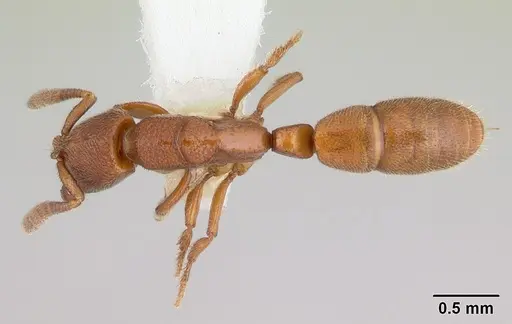
CASENT0900369
View on AntWeb
Literature
Loading distribution map...Loading products...