
Gracilidris pombero
- Sci. Name
- Gracilidris pombero
- Tribe
- Leptomyrmecini
- Subfamily
- Dolichoderinae
- Author
- Wild & Cuezzo, 2006
- Distribution
- Found in 3 countries
Introduction
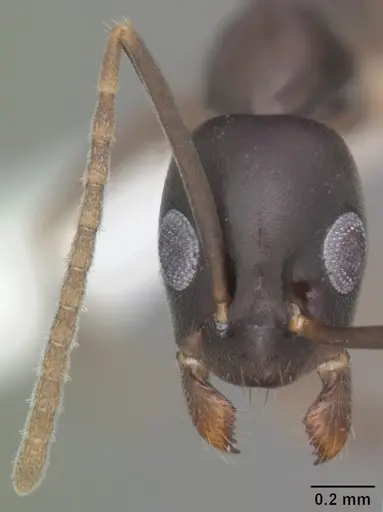
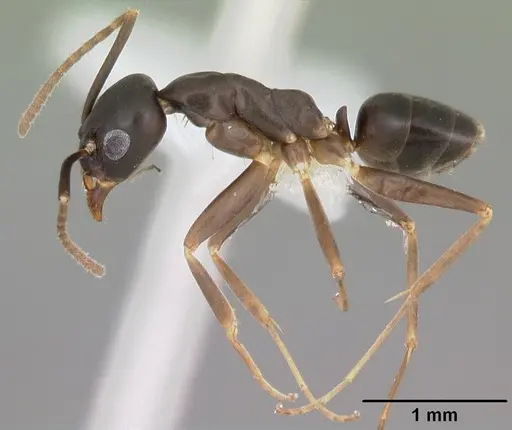
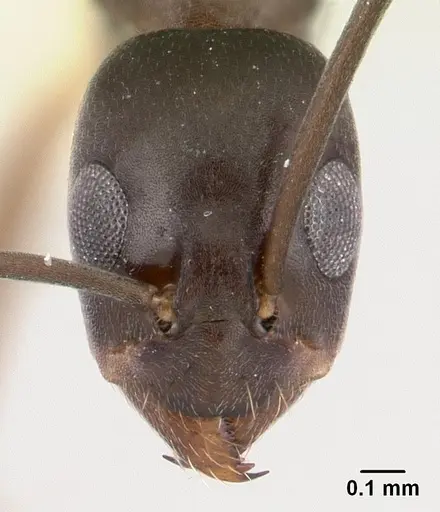
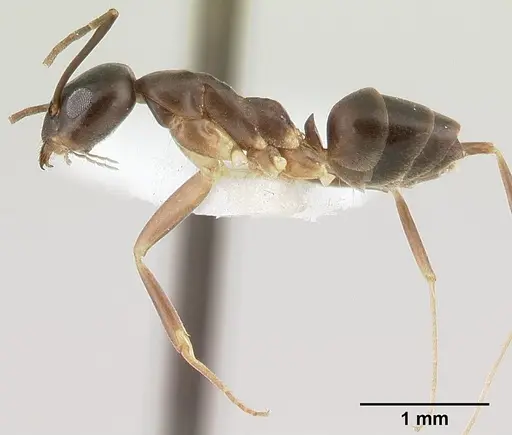
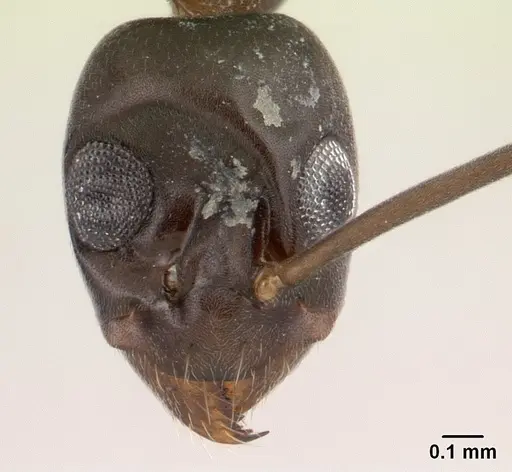
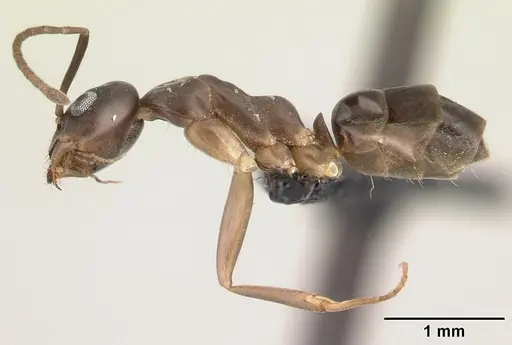
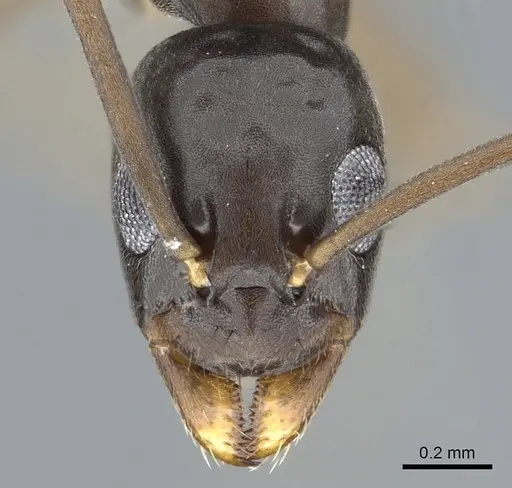
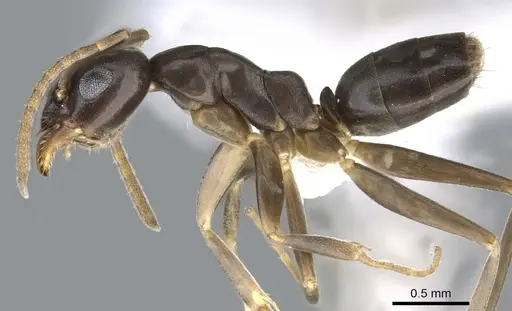
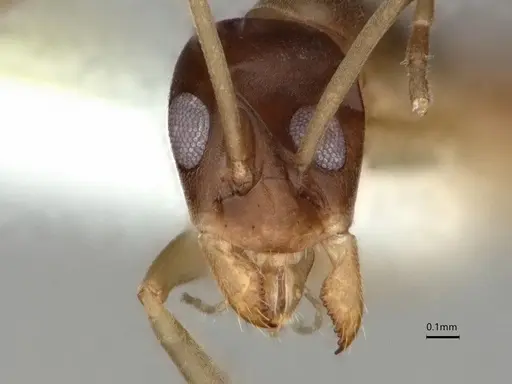
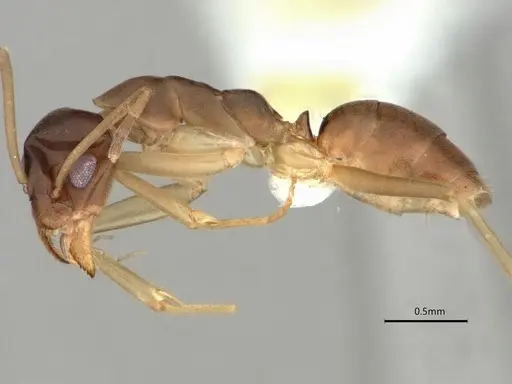
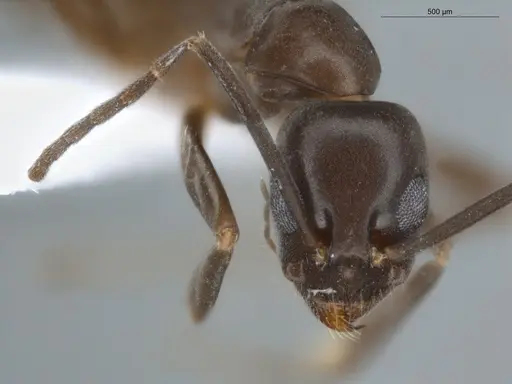
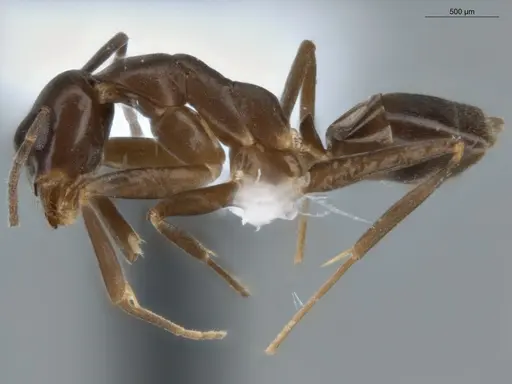
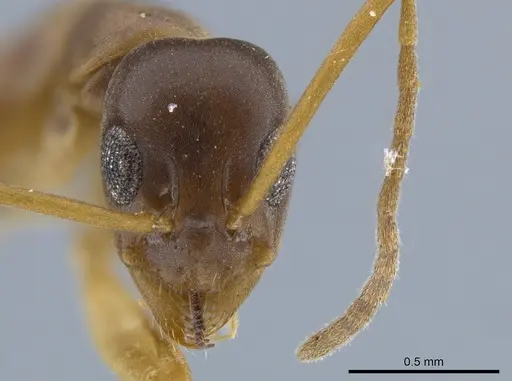
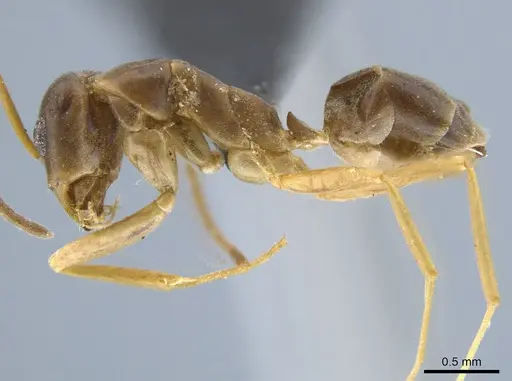
Gracilidris pombero is a small, slender ant and the only living species in its genus. Workers have an elongated body with large eyes positioned near the middle of the head . Their coloration varies geographically - specimens from Paraguay and Argentina tend to be darker brown, while Brazilian populations often have lighter brown heads and gasters with testaceous mesosomas . The species was only discovered in 2006,representing a remarkable rediscovery of a lineage previously known only from 15-20 million-year-old Dominican amber fossils . The name 'pombero' comes from a mythical nocturnal figure in Guaraní folklore, reflecting this ant's primarily nocturnal foraging behavior . This species is notable for being a living fossil - the genus was previously known only from ancient amber specimens until its rediscovery in Paraguay. It thrives in open, disturbed habitats like cattle pastures and savannas, making it one of the few ants that actually benefits from human land use. However, almost nothing is known about its colony structure, queen reproduction, or development - only workers have ever been documented .
Quick Summary
- Difficulty: Unknown, species has never been kept in captivity
- Origin & Habitat: Native to South America, found in Argentina, Brazil, Colombia, and Paraguay. Inhabits open savanna and scrubland habitats (cerrado, chaco) and human-disturbed areas like cattle pastures, cocoa plantations, and urban areas [1][5][6].
- Colony Type: Unknown, only worker caste has been documented. Colonies are small, with approximately 25 workers observed in nest excavations [1].
- Size & Growth:
- Queen: Size data unavailable, queen caste has never been documented [1]
- Worker: Size data unavailable, only partial measurements (head, antenna, mesosoma) exist. Based on genus patterns, workers are likely 2-3 mm total length.
- Colony: Small, approximately 25-36 workers per colony [1][4]
- Growth: Unknown
- Development: Unknown, no data on development [1] (Brood has never been documented. All life stages (eggs, larvae, pupae) are unknown.)
- Antkeeping:
- Temperature: Based on habitat (cerrado, chaco, southern Brazilian grasslands), aim for warm conditions around 22-28°C. The species tolerates temperatures from cool southern Brazilian winters to hot tropical savannas [5].
- Humidity: Prefers relatively dry conditions. Found in areas receiving 1,000-1,500mm annual rainfall. Keep nest substrate moderately moist but not wet, avoid the damp conditions preferred by many tropical ants [5].
- Diapause: Likely, the southernmost populations in Brazil and Argentina experience cool winters in the Pampa biome. Expect a winter rest period of 2-3 months during the coldest months [7].
- Nesting: Natural nesting is in soil with a small earthen turret entrance. The turret is only a few millimeters tall and opens at ground level on one side, making the nest entrance cryptic and concealed from above [1][7]. In captivity, use a naturalistic setup with soil or a plaster nest with a small entrance chamber. Avoid overly humid conditions.
- Behavior: Workers are nocturnal foragers, collected at dusk and after dark in the field. They may also forage during the day through shallow underground galleries (0-10cm depth) [6]. Workers move with smooth, deliberate movements and hold their gaster horizontally [1]. They are attracted to protein baits like sardines, suggesting generalist feeding habits [7]. Escape risk is low, they are small but not particularly agile climbers. Use standard barrier methods.
- Common Issues: this species has never been kept in captivity, all care recommendations are speculative extrapolations from field observations, colony size is extremely small (under 40 workers), making colonies fragile and vulnerable to stress, no information exists on founding behavior, queens have never been documented, so captive breeding may be impossible, wild-caught colonies may not survive transfer to artificial conditions given their specialized ecology, the cryptic nocturnal behavior and small colony size make them extremely difficult to locate and collect in the wild
Discovery and Taxonomic Significance
Gracilidris pombero represents one of the most remarkable ant discoveries of the 21st century. The genus was originally described from specimens found in 15-20 million-year-old Dominican amber, representing an ancient lineage thought to have gone extinct [2]. In 2006,Alexander Wild and Fabiana Cuezzo discovered living colonies in Paraguay, confirming the genus still existed [1]. This made it one of the few ant genera known from both fossils and living specimens. The species name 'pombero' honors a nocturnal spirit from Guaraní mythology, fitting for this primarily night-active ant [3]. The discovery was significant enough to be featured in the scientific journal Zootaxa and has since been found across much of South America, though always in small numbers.
Natural History and Foraging Behavior
This species shows unusual flexibility in foraging times. While primarily nocturnal (workers collected at dusk and after dark), they also forage during the day through shallow underground galleries at 0-10cm depth [6]. This subsurface foraging explains why they are rarely found during daytime visual searches but appear consistently in soil samples. Workers are attracted to protein baits, particularly sardines, indicating generalist scavenging habits [7]. Their movements are described as smooth and deliberate, with the gaster held horizontally, a distinctive posture among ants [1]. The combination of nocturnal activity and subsurface foraging likely contributes to their rarity in collections.
Habitat Preferences and Distribution
Gracilidris pombero is strongly associated with open, dry habitats across the South American 'dry diagonal', the savanna regions spanning northeastern Brazil's caatinga, central Brazil's cerrado, and the chaco of Paraguay and Argentina [7]. However, they also thrive in human-disturbed areas: cattle pastures, cocoa plantations, and even urban campuses [5]. This tolerance for disturbance is unusual, most ants avoid heavily modified landscapes. The species has expanded its known range dramatically since 2006,with records now spanning from Colombia to southern Brazil near the Uruguay border [5]. The highest suitability zones are in central Brazil to Paraguay and southern Brazil/Uruguay, though climate models suggest potential habitat in Central America as well [5].
Captive Care - Speculative Recommendations
Because this species has never been kept in captivity, all care advice is speculative. Based on field data, provide warm conditions (22-28°C) with moderate humidity, think savanna, not rainforest. The nest should mimic their natural soil nests with a small entrance turret. Use a naturalistic setup with compact chambers rather than large open spaces. Feed protein-rich foods like small insects, the sardine attraction suggests they readily accept protein baits [7]. Given their tiny colony sizes (under 40 workers), handle colonies gently and avoid disturbing them. Expect nocturnal activity, you may rarely see workers during daylight hours. If you obtain a colony, document everything carefully as any observations would be scientifically valuable.
Why This Species Is So Rare in Collections
There are several reasons why Gracilidris pombero is almost never kept: the species was only described in 2006,colonies are tiny (under 40 workers), workers are nocturnal and often forage underground, and their nests have cryptic entrances hidden by small earthen turrets [1]. Additionally, only the worker caste has ever been documented, no one has ever seen a queen, male, or any brood stages [1]. This means we don't know how they reproduce, how long development takes, or whether they're even possible to breed in captivity. The combination of these factors makes this an expert-level species that should only be attempted by those with experience studying rarely-collected South American ants.
Frequently Asked Questions
Can I keep Gracilidris pombero as a pet ant?
This species has never been kept in captivity, so no established care guidelines exist. It would be an extremely challenging species to maintain, colonies are tiny, queens have never been documented, and their nocturnal subsurface foraging makes them difficult to observe. Only experienced antkeepers with access to field-collected colonies should attempt this.
What do Gracilidris pombero ants eat?
Based on field data, they are generalist scavengers attracted to protein baits. Workers collected at sardine baits in the wild indicate they readily accept protein-rich foods [7]. In captivity, offer small insects like fruit flies or pinhead crickets. Sugar sources may be accepted but are less certain.
How big do Gracilidris pombero colonies get?
Colonies are very small, approximately 25-36 workers based on nest excavations [1][4]. This is among the smallest colony sizes recorded for any ant species. The partial nest excavation that yielded 25 workers is believed to represent most or all of a typical colony.
Where does Gracilidris pombero live?
They are found across South America in Argentina, Brazil, Colombia, and Paraguay. Their habitat is open savanna and scrubland (cerrado, chaco) as well as human-disturbed areas like cattle pastures and cocoa plantations [1][5]. The southernmost records are in southern Brazil near Uruguay.
Are Gracilidris pombero ants dangerous?
No, they are tiny ants with no known defensive abilities. They lack a visible stinger and are not aggressive toward humans. Their small size and cryptic habits make them completely harmless.
Do Gracilidris pombero ants need hibernation?
Likely yes, southern populations in Brazil's Pampa biome experience cool winters. Based on the species' southern distribution, expect a 2-3 month winter rest period [7]. Reduce temperatures to around 15-18°C during this time.
How long does it take for Gracilidris pombero to develop from egg to worker?
Unknown, no one has ever documented their brood or development. This is one of the many fundamental knowledge gaps for this species. All life stages (eggs, larvae, pupae) remain undescribed [1].
Can I breed Gracilidris pombero in captivity?
Probably not, queens have never been documented in the wild, meaning we don't know how they reproduce or what triggers colony foundation [1]. Without knowing anything about their reproductive biology, captive breeding is essentially impossible. This remains a species for observation rather than cultivation.
What makes Gracilidris pombero special among ants?
They are a living fossil, the genus was previously known only from 15-20 million-year-old Dominican amber until being rediscovered in Paraguay in 2006 [2]. Additionally, they are one of the few ant species that thrives in human-disturbed habitats like pastures. Almost nothing else is known about them, no queens, males, brood, or colony structure has ever been documented.
Are Gracilidris pombero good for beginners?
No, this species is not recommended for any level of antkeeping. They have never been kept in captivity, no care guidelines exist, and fundamental biology (queens, development, colony structure) remains completely unknown. Additionally, wild colonies are extremely small and fragile.
Report an Issue
The current care sheet is based fully on literature. See inconsistencies, or something that's incorrect? Please , it will be resolved after review from an admin. Contributing to the blogs tab also helps providing information, to make us be able to further improve the caresheets. Thank you for your support!
References

This caresheet is licensed under CC BY-SA 4.0 .
Community Blogs
CASENT0010797
View on AntWeb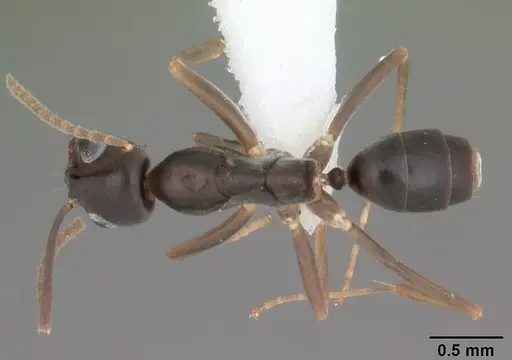
CASENT0179539
View on AntWeb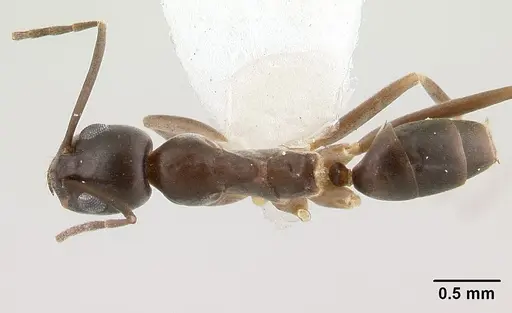
CASENT0196148
View on AntWeb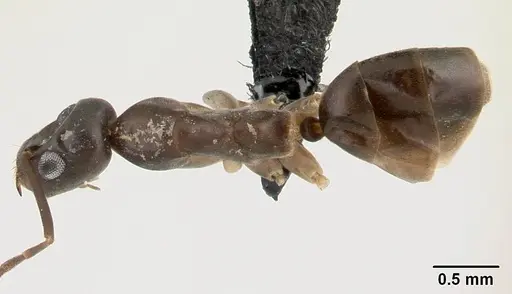
CASENT0902998
View on AntWeb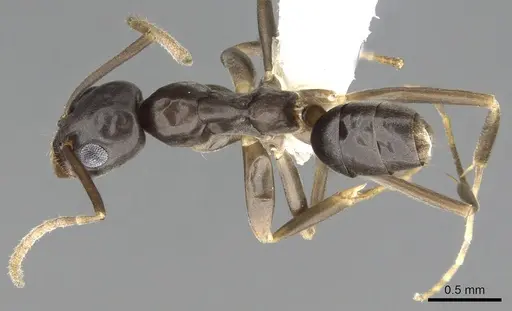
DZUP553709
View on AntWeb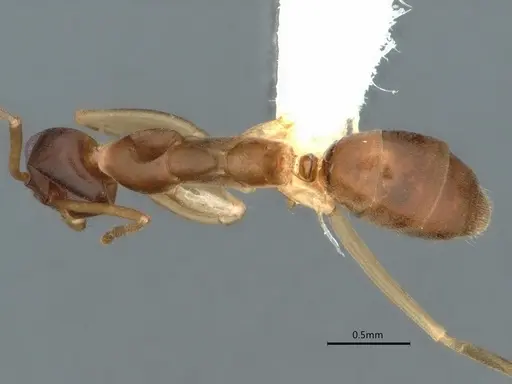
ECOFOG-OI17-0183-05
View on AntWeb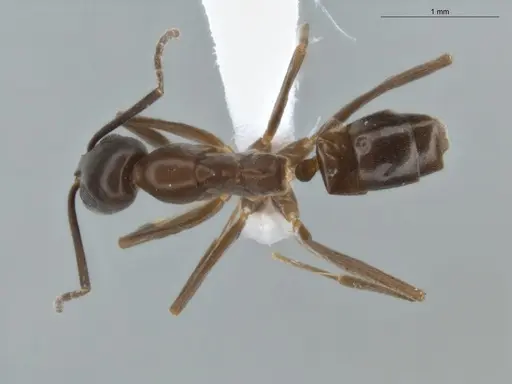
UFV-LABECOL-006118
View on AntWeb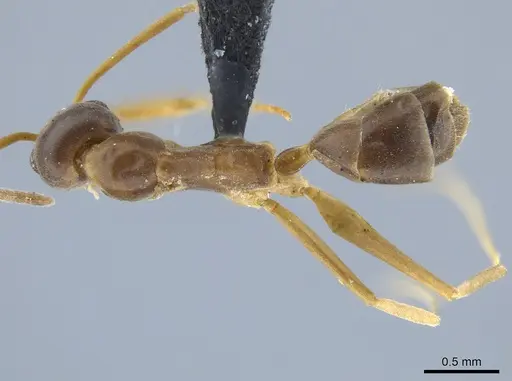
Literature
Loading distribution map...Loading products...