
Kempfidris inusualis
- Sci. Name
- Kempfidris inusualis
- Tribe
- Solenopsidini
- Subfamily
- Myrmicinae
- Author
- Fernández, 2007
- Distribution
- Found in 3 countries
Introduction
Kempfidris inusualis is a tiny myrmicine ant and the sole member of its genus, found across the Amazon basin in South America. Workers measure approximately 2.6mm in total length, making them one of the smaller ant species you'll encounter. They have unusually reduced eyes that are nearly invisible, and their most distinctive feature is a series of minute, hair-bearing pegs on the tip of their abdomen - a structure not found in any other ant genus. Their body ranges from light brown to nearly black, with lighter colored legs and antennae. These ants live in leaf litter and rotting wood in tropical forests, from the Brazilian Amazon through Ecuador, Venezuela, and into Colombia.
Quick Summary
- Difficulty: Unknown, likely Expert
- Origin & Habitat: Neotropical Amazon basin, Brazil, Ecuador, Venezuela, Colombia. Inhabits leaf litter and rotting wood in tropical forests, often in seasonally flooded areas on white sandy soil [1][2].
- Colony Type: Unknown, only worker caste has been described. Queen and male are unknown [1].
- Size & Growth:
- Antkeeping:
- Temperature: Unknown, must infer from habitat. Based on Amazon leaf-litter ants, aim for warm conditions around 24-28°C with slight gradient
- Humidity: Unknown, must infer from habitat. Amazon leaf-litter species prefer high humidity with moist substrate
- Diapause: Unknown, likely no true diapause given tropical distribution, but may have reduced activity during wet season
- Nesting: In nature they nest in rotting wood and leaf litter. In captivity, a small test tube setup or miniature formicarium with moist substrate works well. They need tight spaces scaled to their tiny size and should not be kept in large, open areas [1][4].
- Behavior: This species is poorly known. Based on related genera (Solenopsis, Monomorium), they are likely ground-dwelling and may show typical myrmicine behavior. Their tiny size and reduced eyes suggest they may be more cryptic and less aggressive than larger ants. Escape prevention is critical due to their very small size, they can squeeze through the tiniest gaps [2]. The subfamily Myrmicinae has a sting as the primary defense mechanism.
- Common Issues: Almost no information exists on captive care, this is an entirely unstudied species in captivity, Their tiny size makes them difficult to house and feed, standard ant setups may be too large, Queen and male are unknown, meaning wild colony founding is the only option, Reduced eyes suggest they may be photophobic and prefer dark, enclosed spaces, No established feeding guidelines exist, experimental approach required
Discovery and Taxonomy
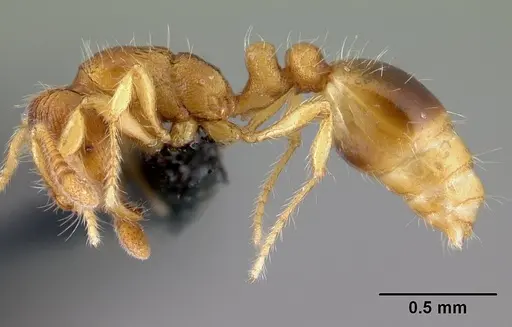
Kempfidris inusualis was originally described in 2007 as Kempfidris inusualis by Fernando Fernández. In 2014,Fernández, Feitosa, and Lattke recognized it as distinct enough to warrant its own genus, creating Kempfidris, a monotypic genus containing only this single species. The name 'inusualis' refers to the ant's unusual traits and the taxonomic difficulty of placing it. Its most remarkable feature is the series of minute, hair-bearing pegs on the abdominal apex, called micro-pegs or cylindrical tubercles. This appears to be a unique structure not found in any other ant genus, possibly a glandular structure related to the pygidial gland, or perhaps a sensory organ for stinging [3][1].
Distribution and Habitat
This species has a broad but scattered distribution across the northern South American continent. Known populations exist in Venezuela (Maroa in Amazonas), Ecuador (Napo province, Limoncocha), Brazil (Benjamin Constant and Porto Velho in Amazonas, Barrolândia in Bahia, and Rondônia near the Bolivia border), and Colombia (Leticia area in Amazonas) [2][4]. All specimens have been collected from leaf-litter samples using Winkler extraction or from nests in rotting sticks and logs. The habitat is typically tropical forest with white sandy soil that experiences seasonal flooding. Interestingly, all known samples were collected between July and September, which coincides with the low-water period in the Amazon basin. Researchers hypothesize these ants may be more active during dry seasons and might migrate to the canopy during heavy rains to escape flooding [4][5].
Identification and Morphology
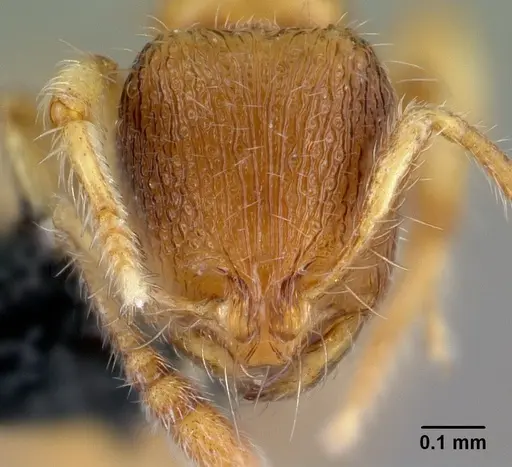
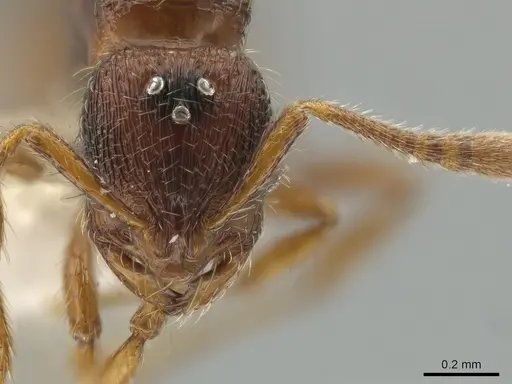
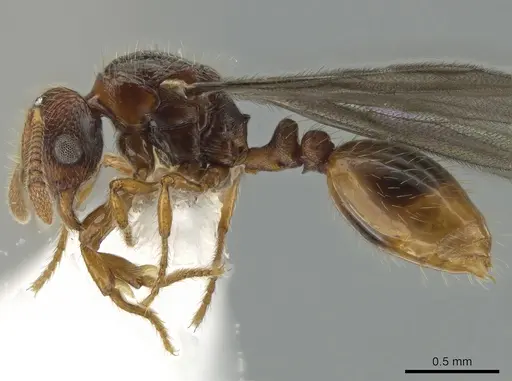
Identifying Kempfidris inusualis requires attention to several unique features. Workers are tiny at around 2.6mm total length. The most distinctive trait is the series of minute, hair-bearing pegs on the abdominal apex, specifically on the posteromedian portion of abdominal tergite VI and anteromedian portion of tergite VII. This structure appears to be an autapomorphy, meaning it's unique to this genus and not found in any other ant [2]. Other key features include: extremely reduced eyes that are nearly invisible (just indistinct ommatidia), a 12-segmented antenna with a strong 3-segmented club, and mandibles with four teeth where three apical teeth are separated from an isolated basal tooth by a large gap (diastema). The head is longer than wide with subparallel sides, and the metanotal groove is very deep and well-marked [3][1].
Keeping Kempfidris-like Ants
Since Kempfidris inusualis has never been kept in captivity and has virtually no documented natural history, care recommendations must be inferred from related leaf-litter ants in the Solenopsidini tribe. Based on typical patterns for tiny Amazonian myrmicines, provide a small nest setup with tight chambers scaled to their 2.6mm size, standard test tubes work but may need to be modified for their tiny scale. Maintain high humidity around 75-85% and warm temperatures of 24-28°C. They likely nest in rotting wood, so providing some decaying wood material in the nest may help. Feed small protein sources like micro-prey (fruit flies, springtails) and occasional sugar water. Given their completely unknown captive requirements, this species is suitable only for experienced antkeepers who can experiment and adapt to the ants' behavior. Document your observations carefully, any captive husbandry data would be scientifically valuable for this poorly known species [5][1].
Frequently Asked Questions
Can I keep Kempfidris inusualis as a pet ant?
This species is extremely rare in the antkeeping hobby and has never been documented in captivity. The queen and male are unknown to science, meaning you can only obtain colonies by collecting wild queens (which hasn't been studied). Only expert antkeepers with experience in difficult species should attempt this, expect a steep learning curve with no established care guidelines.
What do Kempfidris inusualis ants eat?
Their diet is completely unstudied. Based on related genera in Solenopsidini (like Solenopsis and Monomorium), they likely eat small insects, honeydew, and may accept sugar sources. Start with small live prey like fruit flies and springtails, plus sugar water, and observe what they accept.
How big do Kempfidris inusualis colonies get?
Colony size is unknown. Based on their tiny worker size and related leaf-litter ants, colonies are likely small. Only the worker caste has ever been described, and no large colony series have been collected [1].
What is the best nest type for Kempfidris inusualis?
In nature they nest in rotting wood and leaf litter. For captivity, use a small test tube setup or miniature formicarium with moist substrate. The key is providing appropriately scaled, tight spaces, these tiny ants can slip through standard barrier setups. Avoid large, open spaces [1][4].
Where does Kempfidris inusualis live in the wild?
They live in the Amazon basin across northern South America: Brazil (Amazonas, Bahia, Rondônia), Ecuador (Napo), Venezuela (Amazonas), and Colombia (Leticia area). They inhabit tropical forest leaf litter and rotting wood in areas with seasonally flooded sandy soil [2][4].
How do I identify Kempfidris inusualis?
Look for: tiny workers (approximately 2.6mm), nearly invisible reduced eyes, a 3-segmented antenna club, and most distinctively, minute hair-bearing pegs on the tip of the abdomen. No other ant genus has this abdominal structure. The mandibles have four teeth with a large gap between the basal tooth and the three apical teeth [2][3].
Are Kempfidris inusualis good for beginners?
No. This species is completely unstudied in captivity with no established care guidelines. The queen hasn't been described, colony structure is unknown, and no one has documented their development or dietary needs. This is an expert-level species for antkeepers who enjoy pioneering care for rare, poorly-known species.
What temperature and humidity do they need?
Not documented. Based on their Amazon leaf-litter habitat, aim for warm temperatures (24-28°C) and high humidity. Provide a moisture gradient so they can choose their preferred conditions. Expect experimentation to be necessary [5].
When do Kempfidris inusualis have nuptial flights?
Unknown. All specimens have been collected between July and September, which corresponds to the dry/low-water season in the Amazon. This might indicate flight timing, or it could be a collecting artifact. No direct data on reproduction exists [1][5].
Why are they called Kempfidris inusualis?
The name 'inusualis' means 'unusual' in Latin and refers to this ant's many unusual traits, particularly the unique abdominal pegs and the taxonomic difficulty of placing it in any existing genus. The genus name 'Kempfidris' honors entomologist Walter Kempf, a major figure in ant taxonomy for South America [3].
Can I find and catch a Kempfidris inusualis queen?
The queen caste has never been described by science, so we don't know what it looks like or how to identify it. Only workers are known. Finding this species would require searching leaf-litter in Amazon forests during July-September and using Winkler extraction or searching rotting wood, this is research-level fieldwork, not typical ant collecting [1][5].
Report an Issue
The current care sheet is based fully on literature. See inconsistencies, or something that's incorrect? Please , it will be resolved after review from an admin. Contributing to the blogs tab also helps providing information, to make us be able to further improve the caresheets. Thank you for your support!
References

This caresheet is licensed under CC BY-SA 4.0 .
Community Blogs
CASENT0217050
View on AntWeb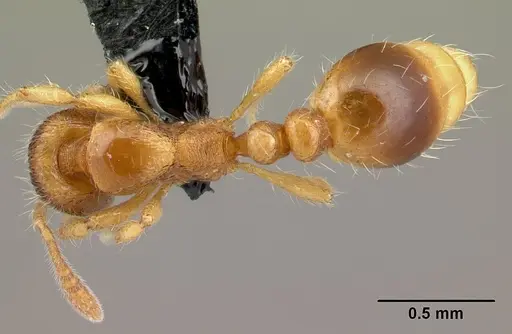
CASENT0650475
View on AntWeb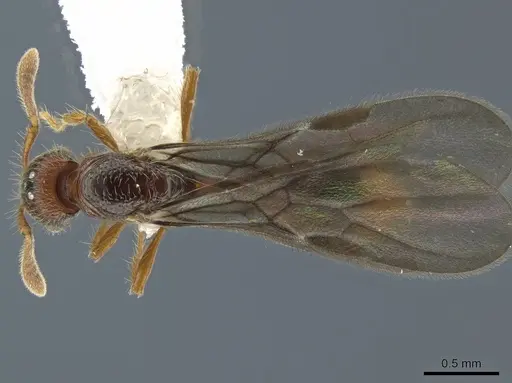
Literature
Loading distribution map...Loading products...