
Nebothriomyrmex majeri
- Sci. Name
- Nebothriomyrmex majeri
- Tribe
- Leptomyrmecini
- Subfamily
- Dolichoderinae
- Author
- Dubovikov, 2004
- Distribution
- Found in 1 countries
Introduction
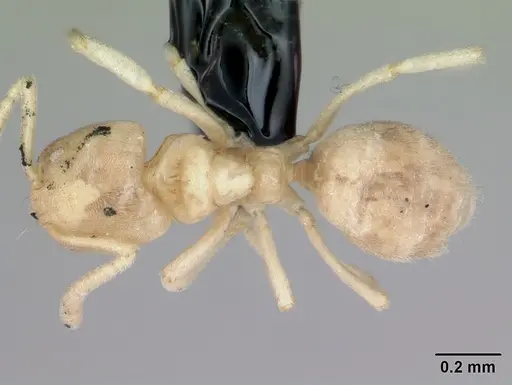
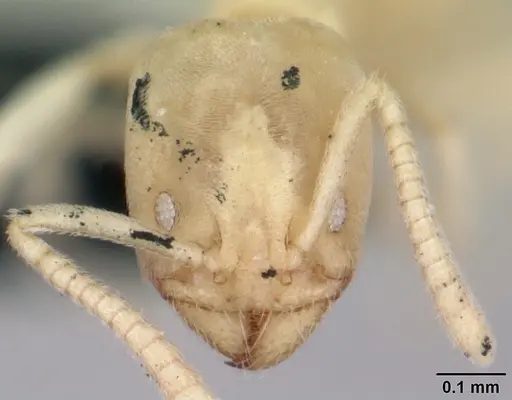
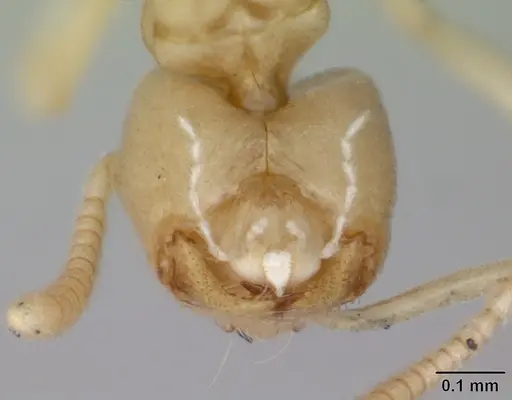
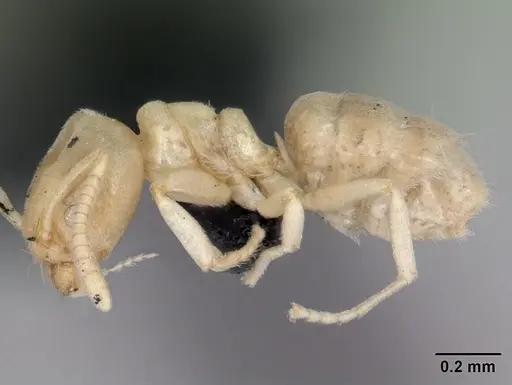
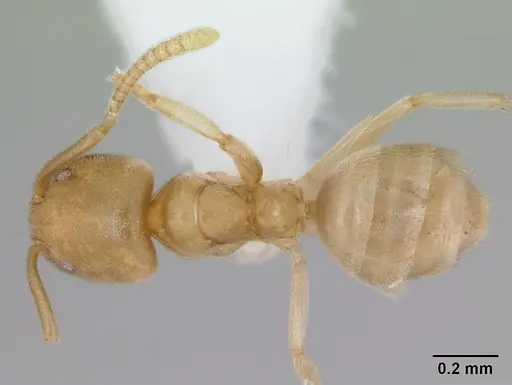
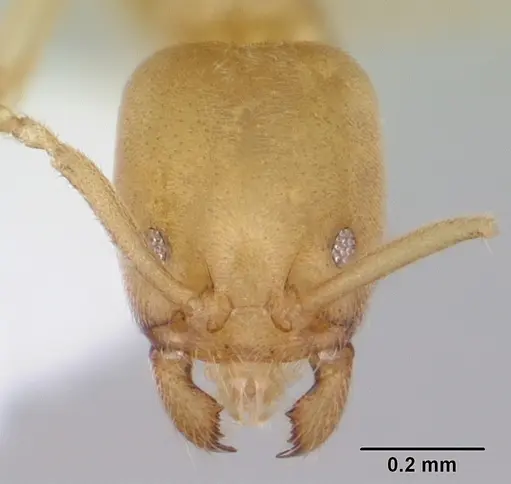
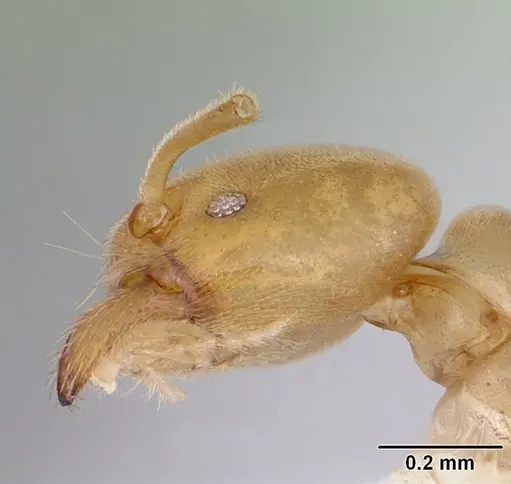
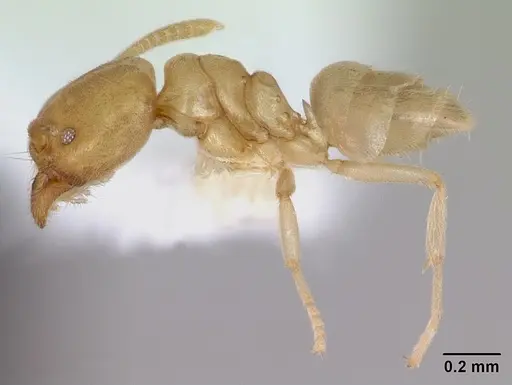
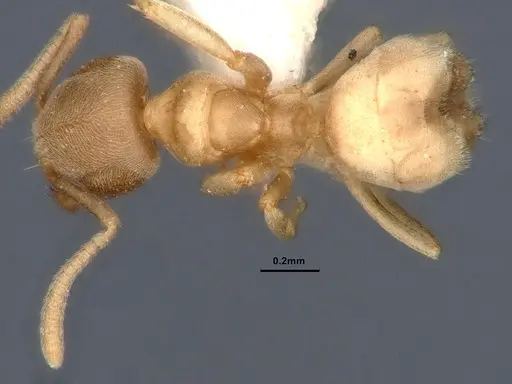
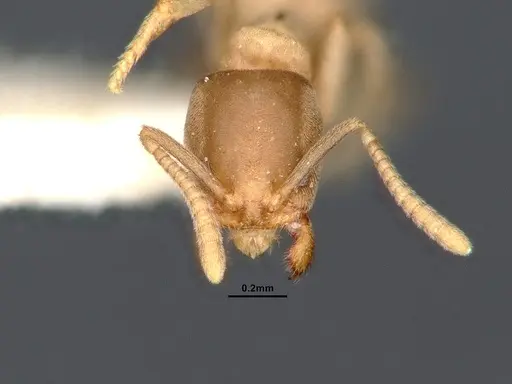
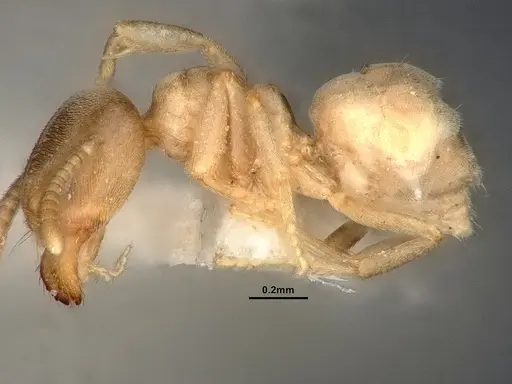
Nebothriomyrmex majeri is an exceptionally rare ant species - the only one in its genus, described in 2004 from workers collected in southwestern Australia. These are tiny ants, measuring just 1.5-1.9mm, with a pale yellow body and slightly darker abdomen. They belong to the Dolichoderinae subfamily, tribe Leptomyrmecini. In the wild, they live in coastal peppermint scrubland around Bremer Bay, nesting in white sand under rotting wood and around tree roots, where they may tend to root aphids or other Hemiptera . This species remains poorly studied - only worker ants have been described, and nothing is known about their queens, reproduction, or colony development.
Quick Summary
- Difficulty: Unknown, species is extremely rare in cultivation
- Origin & Habitat: Southwestern Australia, particularly abundant in coastal peppermint (Agonis flexuosa) scrubland around Bremer Bay and the Darling Range. Nests in white sand under rotted wood and around tree and shrub roots [1].
- Colony Type: Unknown, only workers have been described. No data on queen number or colony structure.
- Size & Growth:
- Antkeeping:
- Temperature: Unknown, no specific research. Based on southwestern Australian origin (Mediterranean climate), room temperature (18-24°C) is likely suitable as a starting point. Observe colony activity and adjust.
- Humidity: Likely prefers moderate to high humidity given their natural habitat in sandy soil near roots. Keep substrate consistently moist but not waterlogged.
- Diapause: Likely yes, southwestern Australia has cool, wet winters. A mild winter rest period around 10-15°C for 2-3 months may benefit colonies, though this is inferred.
- Nesting: Natural nesting is in white sand under rotted wood and around roots. In captivity, a small test tube setup or mini Y-tong with moist substrate would likely work. Their tiny size means chambers should be small and tight.
- Behavior: Not documented. Being Dolichoderines in the Leptomyrmecini tribe, they lack a functional sting. Instead, they secrete defensive chemical compounds from a slit-like opening at the tip of the abdomen (smear defense). Their small size and pale coloration suggest they may be subterranean or cryptic foragers. Escape prevention is critical due to their tiny size, they can squeeze through the smallest gaps.
- Common Issues: this species is virtually unknown in antkeeping, no established care protocols exist, tiny size means escapes are likely without fine mesh barriers, no information on founding behavior, queens have never been described, may be difficult to feed if they require live root aphids or specific prey, wild-caught colonies may have parasites given their cryptic lifestyle
Rarity and Collection Status
Nebothriomyrmex majeri is one of the rarest ants in the antkeeping hobby, if it exists in cultivation at all. The species was only described in 2004,making it a relatively recent discovery, and only worker ants have ever been documented [3]. No queens, males, or reproductive castes have been described in the scientific literature, meaning we have no information about how they reproduce or establish colonies. This species is primarily known from pitfall trap collections in the Darling Range and coastal areas around Bremer Bay in Western Australia [1]. If you encounter this species for sale, it would be exceptionally unusual, most antkeepers working with Australian species have never seen it available.
Natural History and Habitat
In the wild, Nebothriomyrmex majeri lives in southwestern Australia's coastal peppermint scrubland, particularly around Bremer Bay. They nest in white sand beneath rotting wood and around the roots of trees and shrubs [1]. Their close association with roots suggests they may tend to root aphids or other Hemiptera (sap-sucking insects) for honeydew, similar to many other Dolichoderine ants. The workers are tiny and depigmented (pale yellow), which is typical of ants that live in cryptic, shaded microhabitats rather than foraging openly. This species is not uncommon in the Darling Range, but it is particularly abundant in the coastal peppermint areas around Bremer Bay where many clusters of colonies can be found [1].
Housing and Nesting
Since this species has never been kept in captivity (as far as documented), any housing recommendations are speculative. Based on their natural nesting in white sand under rotting wood, a small test tube setup with moist cotton or a mini Y-tong with sandy/soil substrate would be the most logical starting point. The chambers should be small and tight-fitting given their tiny 1.5-1.9mm worker size. Escape prevention is absolutely critical, these ants are small enough to squeeze through standard test tube barriers. Use fine mesh and check for any gaps. Provide some form of cover or darkening since they appear to be cryptic nesters that avoid light. A small outworld with minimal space would suffice for feeding. [2]
Feeding and Diet
The natural history notes suggest these ants may tend root aphids or other Hemiptera [1], which means they likely consume honeydew as a sugar source. In captivity, you could offer sugar water, honey, or honey water as a sugar source. For protein, small soft-bodied prey would be appropriate given their tiny size, fruit flies, pinhead crickets, or other small insects. However, since no documented feeding observations exist for this species in captivity, acceptance of any specific foods is uncertain. Start with sugar water and small live prey, and observe what they take. The key uncertainty is whether they can survive without access to live root aphids or similar specialized honeydew sources.
Temperature and Seasonal Care
No specific temperature requirements have been documented. Their origin in southwestern Australia (Mediterranean climate with mild winters and warm summers) suggests they can tolerate a range of conditions. A safe starting point would be room temperature around 18-24°C. Given the Mediterranean climate, they likely experience a cooler, wetter winter period and may benefit from a mild diapause, perhaps 2-3 months at 10-15°C. This is speculative but aligns with what many other Australian Dolichoderines require. Monitor colony activity: if they become sluggish, they may be too cold, if they avoid heated areas, they may prefer cooler conditions. Adjust based on your specific colony's behavior.
Why This Species Is So Little Known
Nebothriomyrmex majeri represents a fascinating case of a monotypic genus, it is the only species in its genus, which was only erected in 2004 [3]. The fact that only workers have ever been collected suggests the species may have ergatoid (wingless) queens, or that the queens and males are rarely produced or have different foraging habits that make them hard to catch. The tribe Leptomyrmecini (which includes this genus) represents an Australian radiation of Dolichoderine ants [3], but this particular species seems to be very localized and cryptic. Its abundance in certain coastal areas but apparent rarity in collections suggests it is either difficult to find, difficult to collect, or simply not a priority for researchers. For antkeepers, this means there is essentially no established husbandry knowledge, you are pioneering everything if you obtain this species.
Frequently Asked Questions
Is Nebothriomyrmex majeri available for sale?
Almost certainly not, this is one of the rarest ant species in existence. Only workers have ever been described, and no queens or males have been documented. It is extremely unlikely you will find this species available from any ant supplier.
How big do Nebothriomyrmex majeri colonies get?
Unknown, no colony size data exists. The largest documented specimens are workers at 1.5-1.9mm. Since only workers have ever been collected and described, we have no information about how large their colonies grow.
What do Nebothriomyrmex majeri eat?
Unconfirmed, but likely honeydew and small soft-bodied prey. Their association with root aphids in the wild suggests they consume honeydew. In captivity, offer sugar water, honey water, and small live prey like fruit flies. Acceptance is uncertain since no captive feeding observations exist.
Are Nebothriomyrmex majeri good for beginners?
No, this species is completely unsuitable for beginners. It is one of the least-known ant species in existence, with no documented care protocols, no described queens, and no established breeding in captivity. This is an expert-level species for advanced antkeepers interested in pioneering husbandry of rare species.
What temperature do Nebothriomyrmex majeri need?
No specific requirements documented. Based on their southwestern Australian origin, room temperature (18-24°C) is a reasonable starting point. A mild winter cool-down around 10-15°C for 2-3 months may be beneficial, similar to other Australian ants, but this is speculative.
How long do Nebothriomyrmex majeri take to develop?
Unknown, no development data exists for this species. No one has documented their egg-to-worker timeline.
Can I keep multiple Nebothriomyrmex majeri queens together?
Unknown, queens have never been described for this species. We do not know if they are single-queen (monogyne) or multi-queen (polygyne) colonies. Without any information about their reproductive biology, combining queens is not recommended.
Do Nebothriomyrmex majeri need hibernation?
Likely yes, based on their Mediterranean climate origin. Southwestern Australia has cool, wet winters. A mild winter rest period of 2-3 months at 10-15°C is probably appropriate, though this is inferred rather than documented.
Where is Nebothriomyrmex majeri found in the wild?
Southwestern Australia, particularly around Bremer Bay in coastal peppermint scrubland and the Darling Range. They nest in white sand under rotted wood and around tree and shrub roots [1].
Report an Issue
The current care sheet is based fully on literature. See inconsistencies, or something that's incorrect? Please , it will be resolved after review from an admin. Contributing to the blogs tab also helps providing information, to make us be able to further improve the caresheets. Thank you for your support!
References

This caresheet is licensed under CC BY-SA 4.0 .
Community Blogs
Literature
Loading distribution map...Loading products...