
Parasyscia nitidulus
- Sci. Name
- Parasyscia nitidulus
- Subfamily
- Dorylinae
- Author
- Brown, 1975
- Distribution
- Found in 1 countries
Introduction
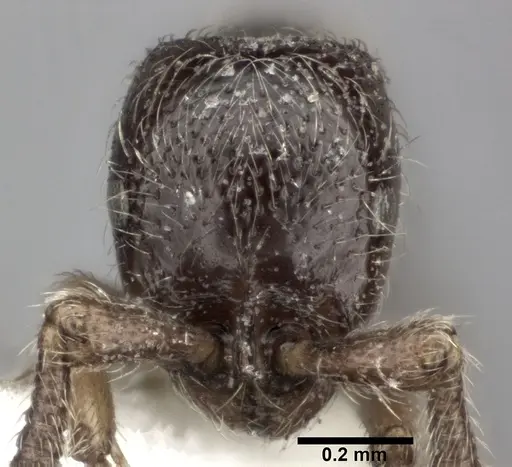
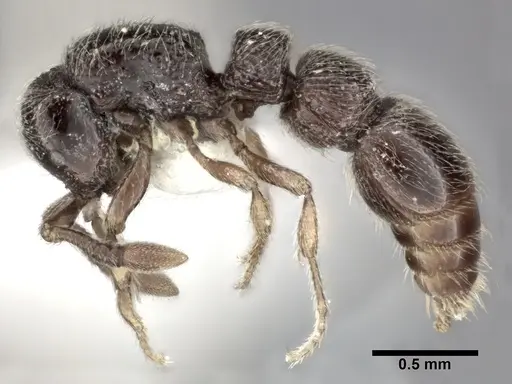
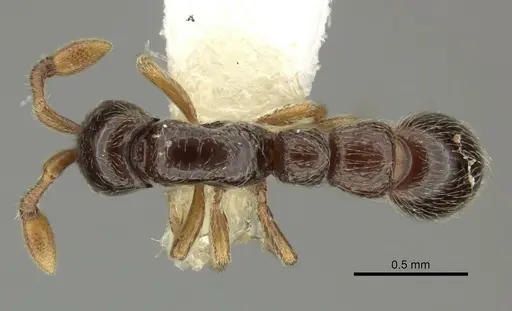
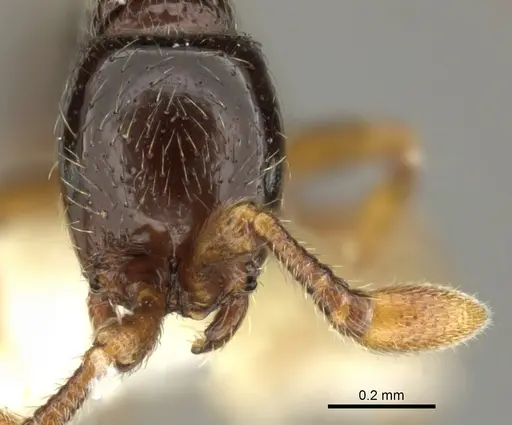
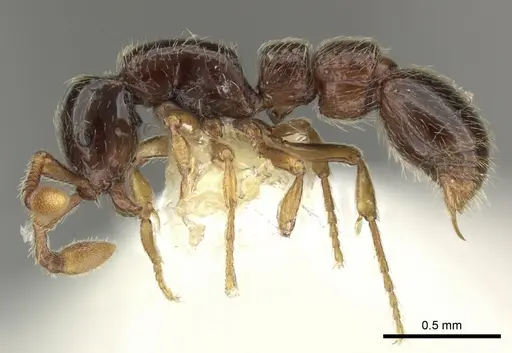
Parasyscia nitidulus is a predatory ant species in the subfamily Dorylinae. It is native to West and Central Africa, with records from Ghana, Ivory Coast, Kenya, Cameroon, and the Democratic Republic of Congo . These ants inhabit leaf litter and forest margins in tropical regions, typically found at elevations around 800-900 meters in Cameroon . Size data for this species is unavailable from current research. This species is a specialist predator, playing a key role in controlling small invertebrate populations in its ecosystem . It remains poorly studied in captivity, with limited information on specific care requirements.
Quick Summary
- Difficulty: Expert
- Origin & Habitat: West and Central Africa (Ghana, Ivory Coast, Kenya, Cameroon, DRC). Found in leaf litter in forest margins and savanna areas at elevations around 800-900m [3][4].
- Colony Type: Unconfirmed
- Size & Growth:
- Queen: size data unavailable
- Worker: size data unavailable
- Colony: Unknown, no data on colony size
- Growth: Unknown
- Development: Unknown, no data available (No direct data available.)
- Antkeeping:
- Temperature: Keep warm, around 24-28°C, based on tropical distribution [3][1]. Provide a temperature gradient for self-regulation.
- Humidity: Keep substrate consistently moist but not waterlogged, as they inhabit leaf litter [3].
- Diapause: No, as this is a tropical species [3][1].
- Nesting: Use moist substrate in naturalistic setups, mimicking leaf litter habitat [3]. Recommended nest types include Y-tong, plaster, or soil nests.
- Behavior: This species is a specialist predator, actively hunting small invertebrates [4]. They are likely nocturnal or crepuscular. Escape risk is moderate due to small size, so use tight-fitting lids and fine mesh barriers. Aggression toward humans is minimal.
- Common Issues: limited captive breeding data makes care uncertain., specific temperature and humidity requirements are unconfirmed., growth rate is unknown., wild-caught colonies may have parasites common to leaf litter ants., difficulty establishing colonies from founding queens due to unconfirmed founding behavior.
Species Overview and Distribution
Parasyscia nitidulus is a West African species first described in 1949 by Weber as Cerapachys nitidus, later renamed by Brown in 1975 [5]. The species is found across the Afrotropical region with confirmed records from Ghana, Ivory Coast, Kenya, Cameroon, and the Democratic Republic of Congo [1][2]. They inhabit tropical forest margins and savanna areas, typically in leaf litter at elevations between 800-900 meters in Cameroon [3]. This species is part of the Dorylinae subfamily, which includes specialized predators. Despite their wide distribution, they remain poorly studied with almost no captive breeding data available.
Feeding and Diet
As a member of the Dorylinae subfamily and classified as a Specialist Predator (SP) in ecological studies [4], Parasyscia nitidulus is an active predator that hunts small invertebrates in the leaf litter. In captivity, you should offer small live prey such as springtails, fruit flies, small crickets, and other micro-arthropods. They likely accept protein-rich foods like small mealworms and bloodworms, but success may vary. Sugar sources may be accepted occasionally, but these ants are primarily predatory and may not strongly seek carbohydrates. Feed small amounts of live prey every 2-3 days, removing any uneaten prey after 24 hours to prevent mold.
Nesting and Habitat Setup
In the wild, these ants nest in leaf litter and soil in forest margins and savanna areas [3]. They prefer dark, humid microhabitats with stable conditions. For captivity, a naturalistic setup works best, a dirt farm or nest filled with moist, loose substrate (a mix of soil and coco fiber) allows them to create their own chambers. Keep the substrate consistently moist but not waterlogged. Provide a humidity gradient so ants can choose their preferred zone. Since they are small and likely nocturnal, keep the nest area relatively dark and avoid excessive disturbance. A test tube setup with a cotton water reservoir can work for founding colonies, but transfer to a larger naturalistic setup once the colony grows.
Temperature and Seasonal Care
As a tropical African species, Parasyscia nitidulus likely prefers warm conditions. Keep them around 24-28°C based on their habitat [3][1]. Start in this range and observe your colony's behavior, if workers cluster together and show reduced activity, try slightly increasing temperature, if they avoid the heated area, reduce it. Provide a temperature gradient across the enclosure so ants can self-regulate. A small heating cable on one side of the nest can help maintain warmth. Since this is a tropical species, formal hibernation is not required, but they may show reduced activity during cooler periods.
Colony Founding and Reproduction
Founding behavior is unconfirmed for this species. No specific data exists on whether queens are claustral or semi-claustral. Related Dorylinae species may have non-claustral founding, but this cannot be assumed for Parasyscia nitidulus. If you obtain a founding queen, provide access to small live prey and monitor closely. The colony structure (single queen vs. multiple queens) remains unconfirmed.
Frequently Asked Questions
What do Parasyscia nitidulus ants eat?
They are specialist predators that hunt small invertebrates. Feed them live springtails, fruit flies, small crickets, and other micro-arthropods [4].
Are Parasyscia nitidulus good for beginners?
No. This species is not recommended for beginners due to very limited captive breeding data, uncertain care needs, and difficulty in establishing colonies [5].
How big do Parasyscia nitidulus colonies get?
Colony size is unknown, as no data is available on maximum colony size for this species.
Do Parasyscia nitidulus need hibernation?
No, as this is a tropical species that does not require formal hibernation [3][1].
Report an Issue
The current care sheet is based fully on literature. See inconsistencies, or something that's incorrect? Please , it will be resolved after review from an admin. Contributing to the blogs tab also helps providing information, to make us be able to further improve the caresheets. Thank you for your support!
References

This caresheet is licensed under CC BY-SA 4.0 .
Community Blogs
Literature
Loading distribution map...Loading products...