
Phalacromyrmex fugax
- Sci. Name
- Phalacromyrmex fugax
- Tribe
- Attini
- Subfamily
- Myrmicinae
- Author
- Kempf, 1960
- Distribution
- Found in 1 countries
Introduction
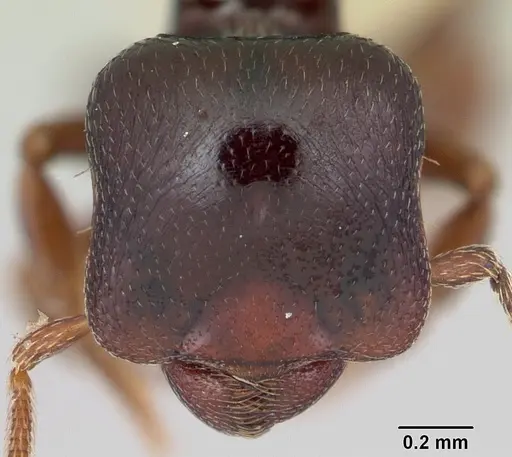
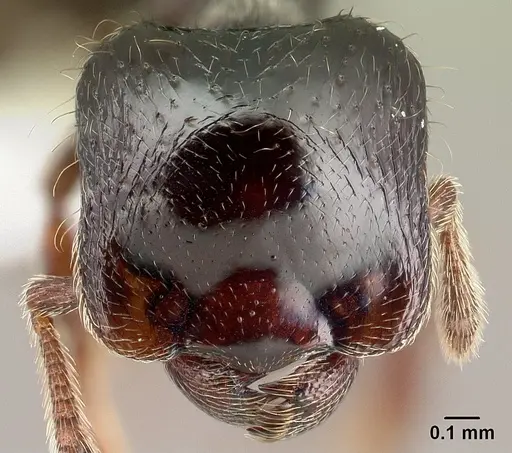
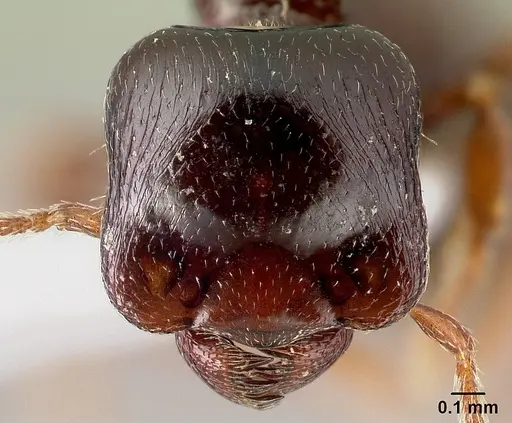
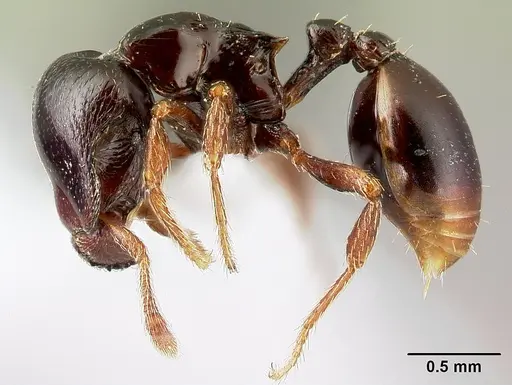
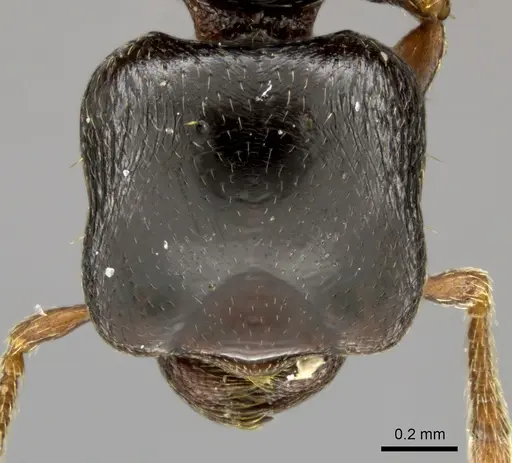
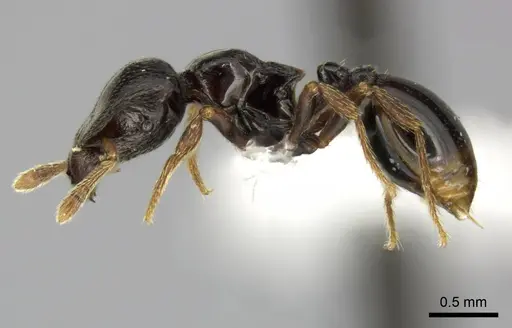
Phalacromyrmex fugax is a tiny, rare ant species endemic to southern Brazil, and it is the only species in its genus. Workers measure 3.6-4.0 mm and have dark piceous coloring, short triangular mandibles with six prominent teeth, and antennae with only 11 segments . The frontal carinae are expanded into flat plates that roof over deep antennal scrobes, giving a unique head shape. This species is closely related to Strumigenys in phylogenetic analyses and has been collected only a few times in the Atlantic Forest region of Santa Catarina and São Paulo states .
Quick Summary
- Difficulty: Expert
- Origin & Habitat: Endemic to the Atlantic Forest in southern Brazil (Santa Catarina and São Paulo states) [5]. Found in forest habitats and older Eucalyptus plantation areas [6][4].
- Colony Type: Colony structure is unconfirmed. This is a monotypic genus with almost no biological data available.
- Size & Growth:
- Queen: Unknown, queen caste has not been described
- Worker: ~3.6-4.0 mm [1]
- Colony: Unknown, only known from short series of workers in museum collections [2]
- Growth: Unknown
- Development: Unknown, no development data exists for this species (Development timeline has not been studied. Related Strumigenys species typically develop from egg to worker in 4-8 weeks at warm temperatures, but this is only an estimate.)
- Antkeeping:
- Temperature: Temperature needs are unclear, start around 22-26°C and observe, based on Atlantic Forest origin [5].
- Humidity: Keep the nest substrate consistently moist but not waterlogged, as inferred from forest habitat [5].
- Diapause: Unknown, no seasonal data available. Southern Brazil has mild winters, so any dormancy would likely be brief.
- Nesting: Based on morphology and phylogenetic relationship to Strumigenys [3], likely nests in soil or rotting wood. Use a naturalistic setup with moist substrate or a Y-tong/plaster nest.
- Behavior: Nothing is directly documented about this species' behavior in captivity. Based on its phylogenetic relationship to Strumigenys [3], it is likely a stealthy predator that uses short triangular mandibles to capture small prey. Escape prevention should be excellent given their small size, they can easily squeeze through standard gaps.
- Common Issues: almost no biological data exists, keepers must extrapolate from related species., very rare in the hobby with no established captive breeding protocols., small size makes escape likely without fine mesh barriers., wild-caught colonies may be stressed or damaged from collection., dietary requirements are speculative, may refuse standard ant foods.
Taxonomy and Classification
Phalacromyrmex fugax is the only species in its genus, making it monotypic. It was described by Kempf in 1960 and placed in its own tribe due to unusual characters. Recent phylogenetic analyses place it within the tribe Attini, where it groups as sister to the Strumigenys clade [3]. The species was collected from Ibicaré in Santa Catarina state, Brazil, by F. Plaumann in July 1959,and only a handful of specimens exist in museum collections [1].
Identification and Morphology
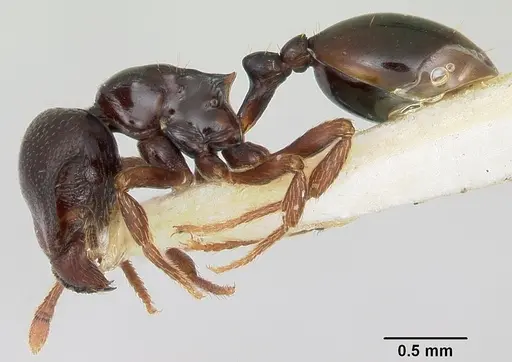
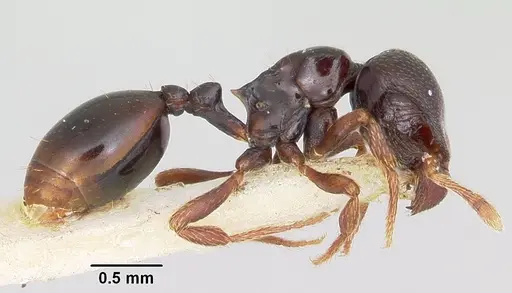
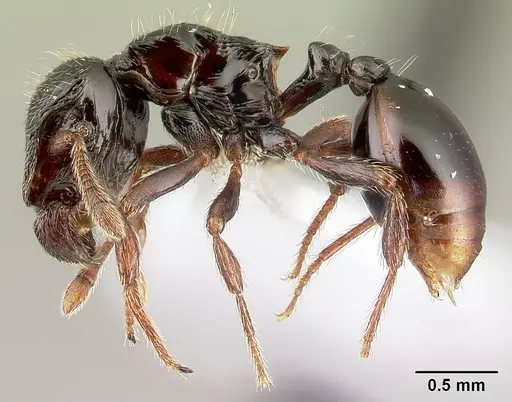
Workers measure 3.6-4.0 mm in total length [1]. Distinctive features include antennae with 11 segments, short triangular mandibles with six teeth, deeply excavated antennal scrobes roofed by expanded frontal carinae, and a flattened body with sharp margins. Color is piceous, with brownish mandibles, antennae, legs, and abdominal tip. Eyes are small with about 6 facets across the greatest diameter [2]. These adaptations suggest a cryptic, predatory lifestyle similar to Strumigenys.
Distribution and Habitat
Phalacromyrmex fugax is known only from the Atlantic Forest in southern Brazil, specifically Santa Catarina and São Paulo states [5]. The type locality is Ibicaré in Santa Catarina, and it has been recorded in older Eucalyptus grandis plantation areas in São Paulo [6][4]. This species is rarely collected, known only from a few individuals in museum collections [4].
Keeping This Species
This is an expert-level species due to almost no biological data. Use a naturalistic or Y-tong setup with consistently moist substrate, maintain moderate humidity, and provide a thermal gradient around 22-26°C. Based on phylogenetic relationship to Strumigenys [3], offer small live prey like springtails or micro-arthropods. Sugar sources may or may not be accepted. Escape prevention must be excellent due to tiny size. If you obtain a colony, document observations carefully.
Related Species and Ecology
Phalacromyrmex is sister to the Strumigenys clade [3], which contains specialized predators of springtails and tiny soil arthropods. While P. fugax has different mandible morphology, it likely fills a similar ecological niche as a micro-predator in the forest floor. The Attini tribe includes leaf-cutter ants, but many genera are predators or fungus-growers. This species likely does not cultivate fungus given its predatory morphology.
Frequently Asked Questions
How long does it take for Phalacromyrmex fugax to develop from egg to worker?
This is unknown, no development data exists for this species. Related Strumigenys species typically take 4-8 weeks from egg to worker at warm temperatures, but this is only an estimate.
What do Phalacromyrmex fugax ants eat?
This is not directly documented. Based on phylogenetic relationship to Strumigenys [3], they likely eat small live prey like springtails or micro-arthropods. Offer small live prey and observe acceptance.
Are Phalacromyrmex fugax good for beginners?
No. This is an expert-level species due to almost no available biological or husbandry data. There are no established care protocols, and any colony obtained will likely be wild-caught and potentially stressed.
What size colony do Phalacromyrmex fugax reach?
Unknown. This species is only known from short series of workers in museum collections, maximum colony size has never been documented.
What temperature should I keep Phalacromyrmex fugax at?
No specific data exists. Based on its Atlantic Forest origin, aim for moderate warmth around 22-26°C. Provide a thermal gradient so the ants can self-regulate.
Do Phalacromyrmex fugax need hibernation?
Unknown. Southern Brazil has mild winters, so any dormancy period would likely be brief or minimal. Without more data, do not attempt forced hibernation.
Can I keep multiple Phalacromyrmex fugax queens together?
Not documented. Colony structure has never been studied for this species. Do not attempt combining unrelated queens.
What nest type is best for Phalacromyrmex fugax?
No established protocol exists. Based on morphology and related species, they likely nest in soil or rotting wood. A naturalistic setup with moist substrate or a Y-tong/plaster nest would be appropriate.
Where does Phalacromyrmex fugax live in the wild?
Only known from the Atlantic Forest in southern Brazil (Santa Catarina and São Paulo states). It has been collected from forest habitats and older Eucalyptus plantation areas.
Report an Issue
The current care sheet is based fully on literature. See inconsistencies, or something that's incorrect? Please , it will be resolved after review from an admin. Contributing to the blogs tab also helps providing information, to make us be able to further improve the caresheets. Thank you for your support!
References

This caresheet is licensed under CC BY-SA 4.0 .
Community Blogs
CASENT0103116
View on AntWeb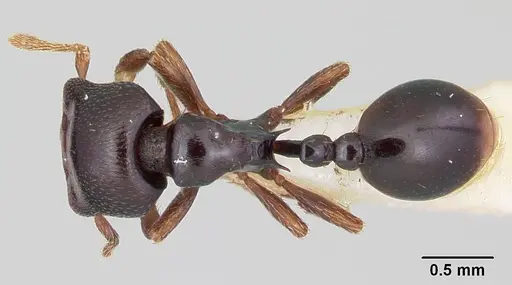
CASENT0179596
View on AntWeb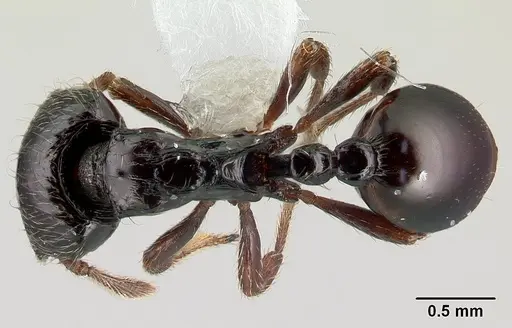
CASENT0217029
View on AntWeb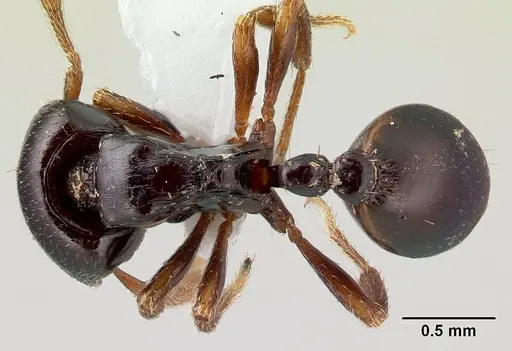
CASENT0235252
View on AntWeb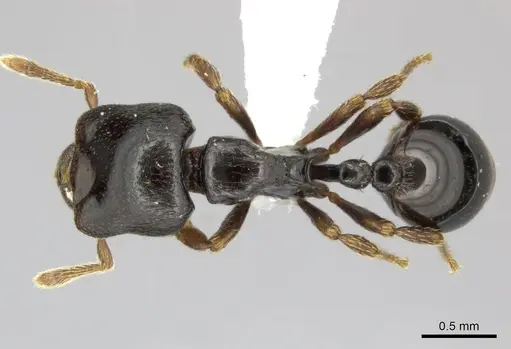
Literature
Loading distribution map...Loading products...