
Promyopias silvestrii
- Sci. Name
- Promyopias silvestrii
- Tribe
- Ponerini
- Subfamily
- Ponerinae
- Author
- Santschi, 1914
- Distribution
- Found in 2 countries
Introduction
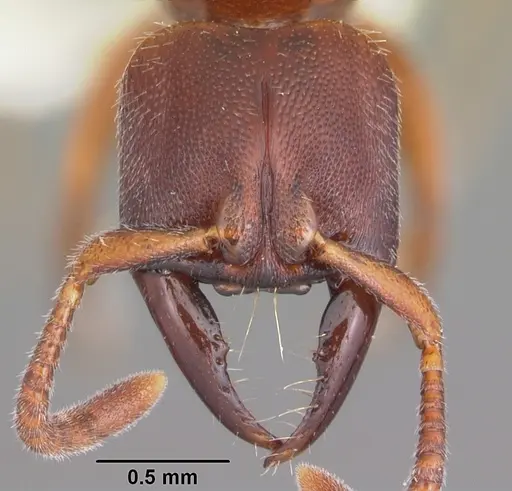
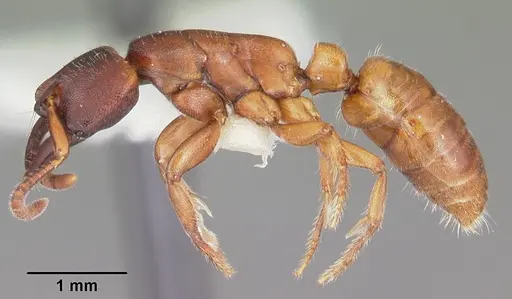
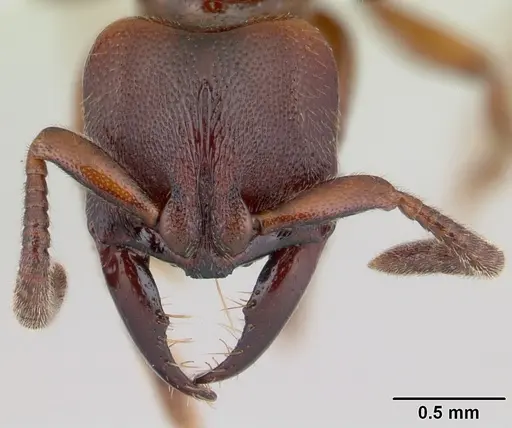
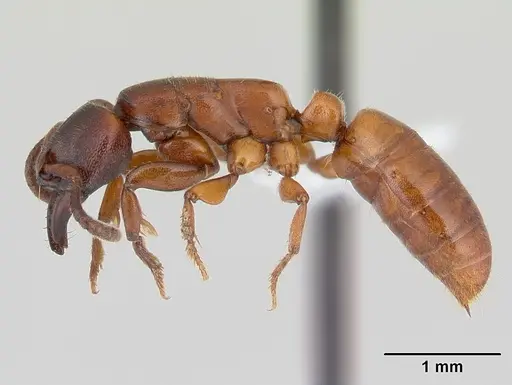
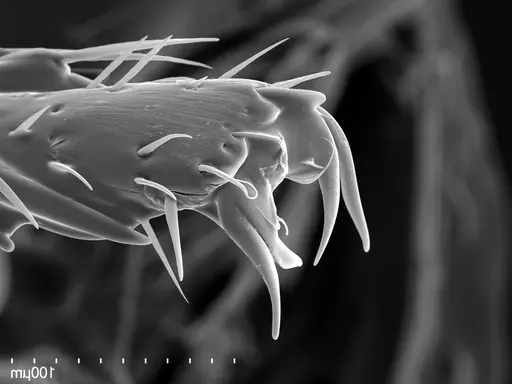
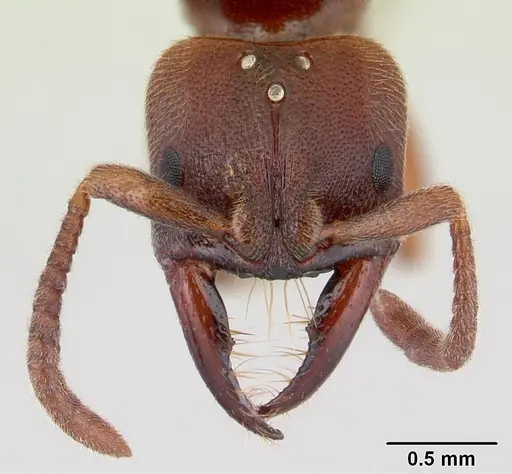
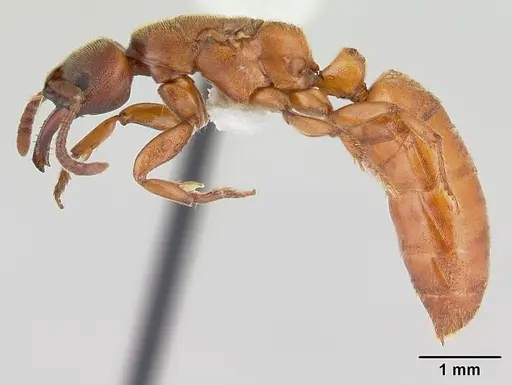
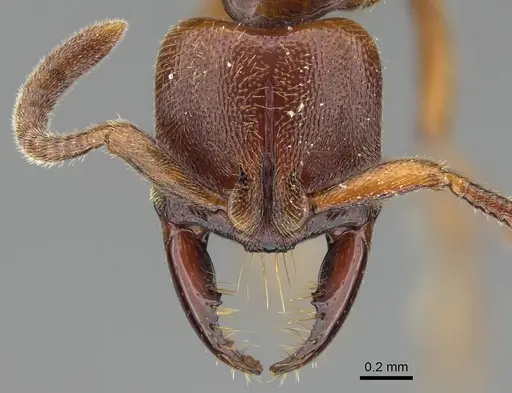
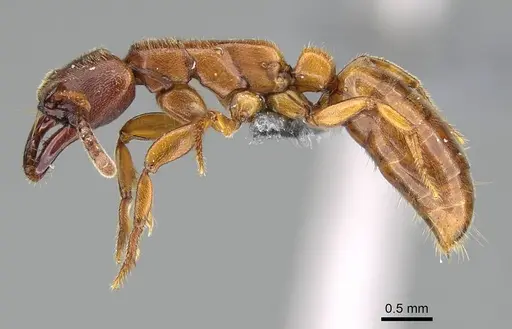
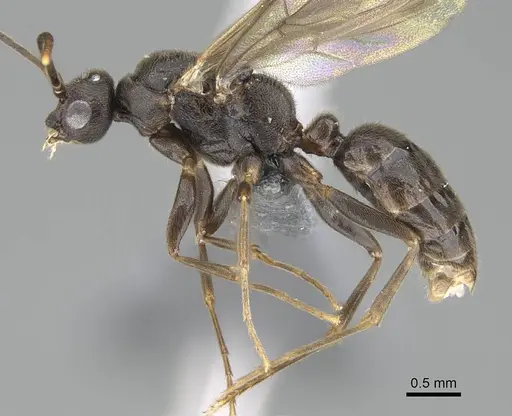
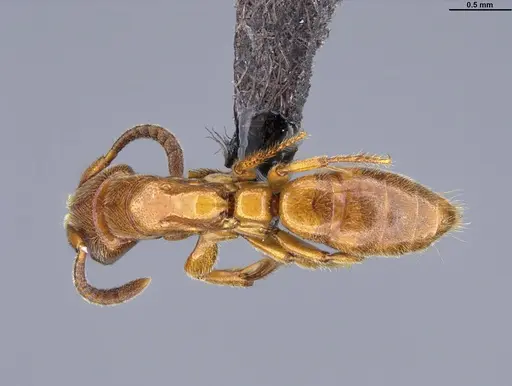
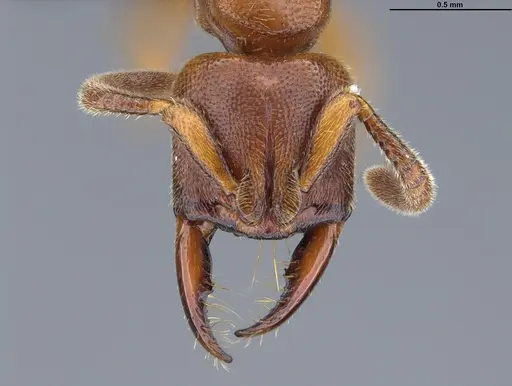
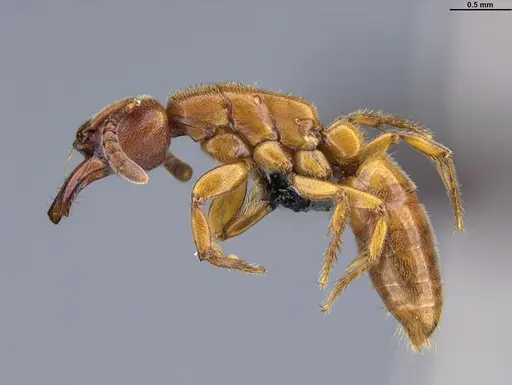
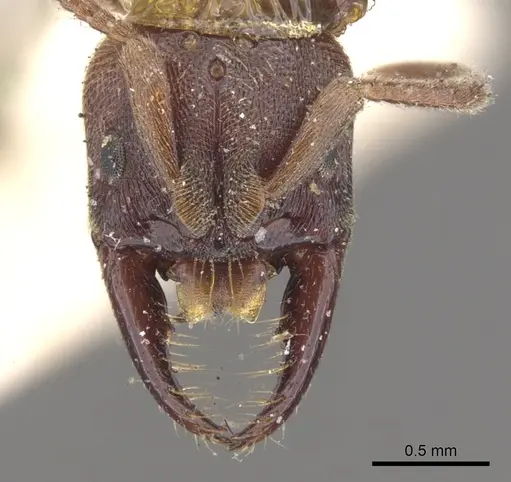
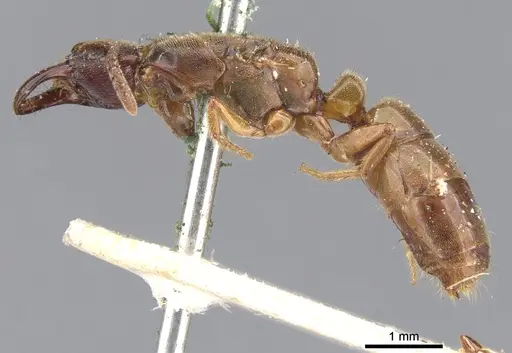
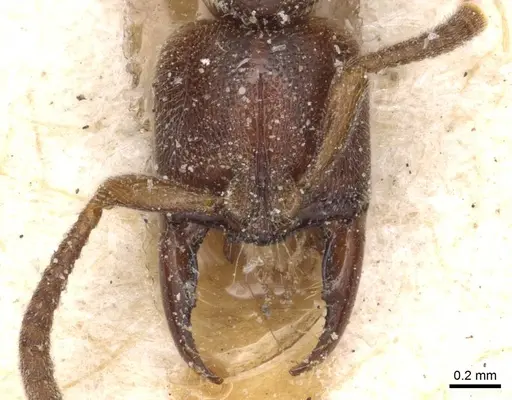
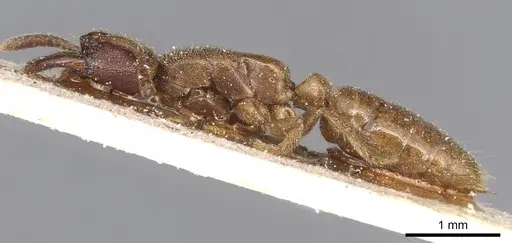
Promyopias silvestrii is a rare African ponerine ant and the only species in its genus. Workers measure 6.0-6.3 mm and are distinctive for having no eyes, slender curved mandibles with small teeth, and specialized traction setae on their middle legs that help them grip surfaces . Their body is dark reddish-brown to black with dense fine punctures and short pubescence . Queens are larger at 7.6 mm and differ by having well-developed eyes . This species is hypogeic, meaning it lives underground and is rarely seen on the surface . It is uncommon but widely distributed across central and southern Africa, from Guinea to Malawi and Angola . The unique curved mandibles suggest it may be a specialized predator, possibly hunting millipedes or termites, though this has never been directly observed .
Quick Summary
- Difficulty: Expert
- Origin & Habitat: Afrotropical distribution across Guinea, Ivory Coast, Cameroun, Angola, and Malawi [1]. This is a subterranean species that lives underground in tropical savanna and forest habitats [3].
- Colony Type: Colony structure is unconfirmed. No direct observations exist on queen number or social structure.
- Size & Growth:
- Queen: 7.6 mm [1][2]
- Worker: 6.0-6.3 mm [1][2]
- Colony: Unknown, no colony size data available
- Growth: Unknown, no development data exists for this species
- Development: Unknown, no direct observations of colony development (This is one of the most poorly studied ant species in captivity. No data exists on egg-to-worker development time.)
- Antkeeping:
- Temperature: Keep warm, around 24-28°C. This is inferred from their African tropical distribution [1].
- Humidity: Maintain high humidity, around 70-80%. Subterranean ants need consistently moist substrate conditions [3].
- Diapause: Unknown, no data on overwintering requirements.
- Nesting: Naturalistic setup with deep soil or a Y-tong/plaster nest works best. This hypogeic species nests underground in nature, so provide soil or compact nesting material [3].
- Behavior: This is a cryptic, subterranean species that avoids light. Workers are blind and navigate using chemical cues [1][2]. They are likely slow-moving and cryptic, not aggressive toward keepers. Escape risk is moderate, they are medium-sized ants but being blind, they may not actively seek escape routes. Standard barrier methods should suffice. Their specialized mandibles suggest a hunting strategy for small arthropods, likely termites or millipedes [1][3].
- Common Issues: no feeding observations exist, you may need to experiment with various small live prey to determine what they accept [1][3], subterranean lifestyle means colonies may appear inactive or hidden, do not assume they are dead [3], no colony development data makes it difficult to know if the colony is thriving, being blind, they may be stressed by excessive light in the nest area [1][2], this species is extremely rare in the antkeeping hobby, finding established colonies may be difficult [1]
Appearance and Identification
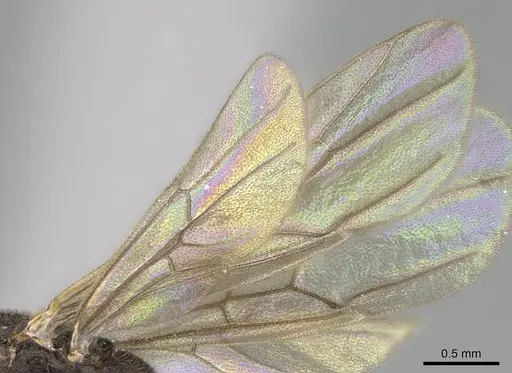
Promyopias silvestrii workers are medium-sized ants measuring 6.0-6.3 mm in total length [1][2]. They are most easily recognized by their completely lack of eyes, which is unusual among ants [1][2]. Their mandibles are long, narrow, and distinctly curved, a unique feature that immediately separates this species from all other African Ponerinae [1][2]. The mandibles have 3-4 small teeth at the tip and a small tooth at the basal angle [1][2]. Workers have specialized traction setae (stiff bristle-like hairs) on their middle legs that help them grip surfaces while hunting or moving through narrow tunnels [1][2]. The body is covered in dense fine punctures giving a matte appearance, with short pubescence [1]. Queens are larger at 7.6 mm and differ by having well-developed eyes and full flight sclerites for wings [1][2].
Distribution and Habitat
This species has an unusually wide but scattered distribution across central Africa. It has been recorded from Guinea in West Africa, Ivory Coast, Cameroun, Angola, and Malawi [1]. This distribution across both West and Central/Southern Africa suggests it may be more common than current records indicate, but its subterranean lifestyle makes it difficult to find [3]. In nature, it is hypogeic, meaning it lives almost entirely underground. Workers rarely if ever come to the surface [3]. This lifestyle explains why so little is known about their behavior despite being described over a century ago.
Feeding and Diet
The diet of Promyopias silvestrii remains unconfirmed. Researchers have hypothesized it feeds on termites (like its presumed relative Centromyrmex) based on its morphology, but this has never been observed [1][3]. More recent analysis suggests it may actually be a specialist millipede predator, because its long curved mandibles are similar to those of Myopias and Plectroctena, which are known millipede specialists [1][3]. The mandible shape is adapted for capturing round prey [1]. For antkeepers, this means you should offer small live prey, ideally small termites, millipedes, or other soft-bodied arthropods. Start with small live insects like fruit flies, termites, or tiny isopods. Sugar sources are unlikely to be accepted given its presumed predatory nature. This is a species where you may need to experiment to find what they will accept.
Housing and Nesting
Because this is a hypogeic (subterranean) species, provide a nesting setup that mimics underground conditions. A naturalistic setup with deep, moist substrate (at least 5-10 cm deep) allows them to create chambers [3]. Alternatively, a Y-tong or plaster nest with narrow chambers works well. Keep the nesting area dark, these blind ants are stressed by excessive light [1][2]. Maintain high humidity in the nest area, as subterranean species need stable moisture [3]. The outworld can be kept drier. Use standard escape prevention, but this species is not particularly escape-prone compared to tiny ants. Provide a water tube for drinking and maintain substrate moisture for humidity.
Temperature and Seasonal Care
Keep this species warm, around 24-28°C. This recommendation is inferred from their African tropical distribution and hypogeic lifestyle, underground temperatures in the tropics are warm and stable [1]. A heating cable on one side of the nest can create a temperature gradient, allowing the ants to choose their preferred zone. Place the heating on top of the nest to avoid drying out the substrate. Regarding diapause or winter rest, no data exists. Given their distribution across tropical Africa, they likely do not require a true hibernation period. However, they may show reduced activity during cooler periods. If you keep them at room temperature (22-25°C), that should be suitable year-round.
Challenges and Why This Is an Expert Species
Promyopias silvestrii is rated as an Expert-level species because almost nothing is known about its captive care. This is not a species you can simply set up and expect to thrive with standard antkeeping knowledge. The biggest challenge is that we have no confirmed feeding observations, you are essentially pioneering the husbandry of this species [1][3]. Their subterranean, blind lifestyle means they may be sensitive to light, vibration, and improper humidity [1][2]. They are also extremely rare in the antkeeping hobby, meaning finding an established colony to work with is very difficult [1]. If you do obtain this species, be prepared to experiment with housing, feeding, and environmental conditions, and document your observations carefully for the benefit of future keepers.
Frequently Asked Questions
What do Promyopias silvestrii ants eat?
Their diet is unconfirmed, but based on their unique curved mandibles, they are likely predators of small arthropods, possibly millipedes or termites [1][3]. Offer small live prey like fruit flies, termites, tiny isopods, or small mealworms. Do not expect them to accept sugar water, they appear to be obligate predators.
How long does it take for Promyopias silvestrii to develop from egg to worker?
This is unknown, no scientific data exists on their development timeline. Based on related Ponerinae species, expect 6-12 weeks at warm temperatures (around 26°C), but this is only an estimate.
Can I keep Promyopias silvestrii in a test tube?
A test tube setup can work for founding colonies, but this hypogeic species prefers deeper nesting material. Consider transitioning to a naturalistic setup with moist soil or a Y-tong nest once the colony grows. Keep the nest dark and humid [3].
Are Promyopias silvestrii good for beginners?
No, this is an Expert-level species. Almost nothing is known about their captive care, and they require specialized conditions (subterranean lifestyle, high humidity, warm temperatures, live prey). They are also extremely rare in the hobby [1].
How big do Promyopias silvestrii colonies get?
Colony size is unknown, no data exists on maximum colony size. Related Ponerinae species typically reach a few hundred workers. Given their wide distribution but rarity, colonies are likely modest in size.
Do Promyopias silvestrii need hibernation?
Diapause requirements are unconfirmed. Based on their African tropical distribution, they likely do not require true hibernation. Keep them at warm temperatures (24-28°C) year-round [1].
Why are my Promyopias silvestrii not coming out?
This is normal, they are hypogeic (subterranean) ants that naturally spend most of their time underground [3]. Blind workers navigate using chemical cues and avoid light [1][2]. Do not assume the colony is dead if you do not see them frequently.
Can I keep multiple Promyopias silvestrii queens together?
This is unconfirmed. No data exists on whether they are monogyne (single queen) or polygyne (multiple queens). Do not combine unrelated queens unless you have specific evidence they will accept it.
What makes Promyopias silvestrii unique among ants?
They are the only species in their genus, and workers are completely blind (no eyes) [1][2]. Their long curved mandibles are unique among African ants and suggest a specialized hunting strategy [1][2]. They are also extremely rare and have never been observed feeding in the wild [1][3].
Report an Issue
The current care sheet is based fully on literature. See inconsistencies, or something that's incorrect? Please , it will be resolved after review from an admin. Contributing to the blogs tab also helps providing information, to make us be able to further improve the caresheets. Thank you for your support!
References

This caresheet is licensed under CC BY-SA 4.0 .
Community Blogs
CASENT0102926
View on AntWeb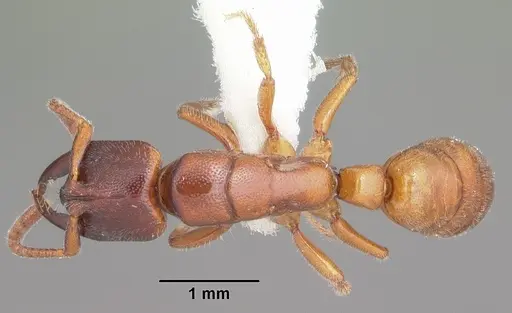
CASENT0178751
View on AntWeb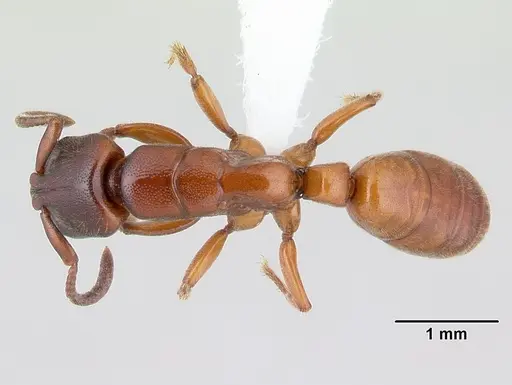
CASENT0178752
View on AntWeb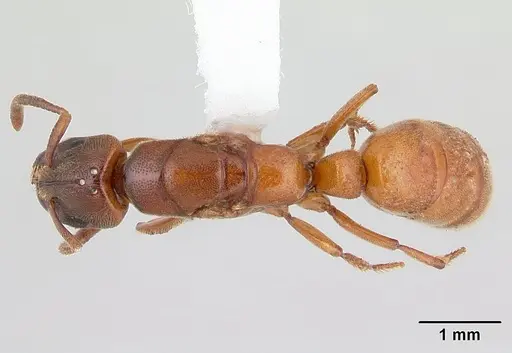
CASENT0779934
View on AntWeb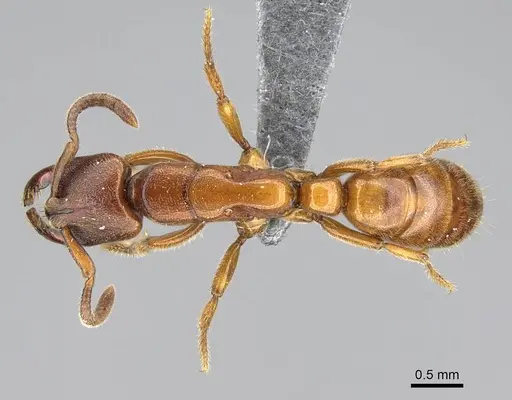
CASENT0782091
View on AntWeb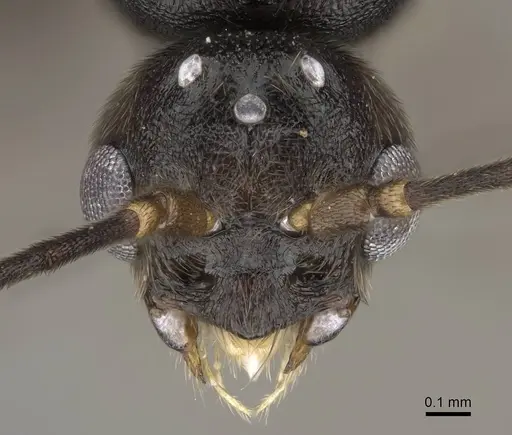
CASENT0898545
View on AntWeb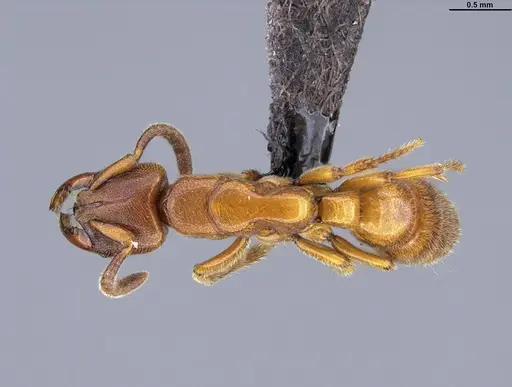
CASENT0902464
View on AntWeb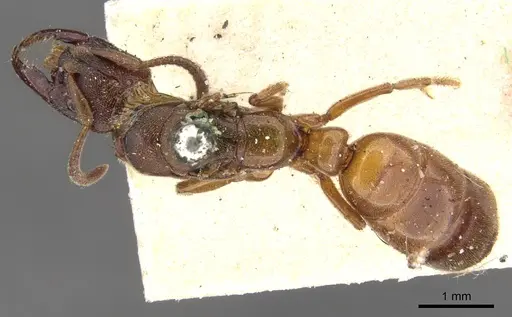
CASENT0915173
View on AntWeb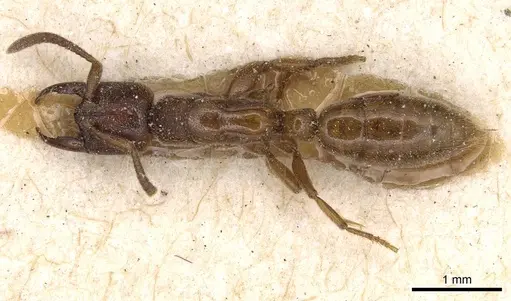
Literature
Loading distribution map...Loading products...