
Strumigenys trinidadensis
- Sci. Name
- Strumigenys trinidadensis
- Tribe
- Attini
- Subfamily
- Myrmicinae
- Author
- Wheeler, 1922
- Distribution
- Found in 7 countries
Introduction
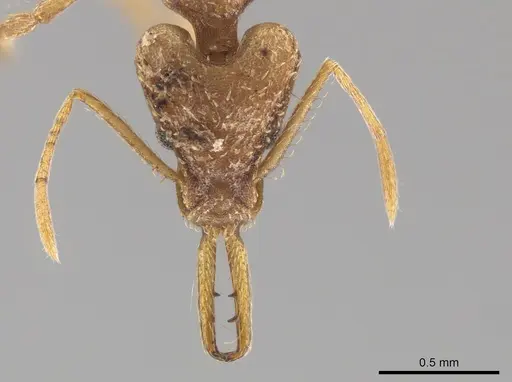
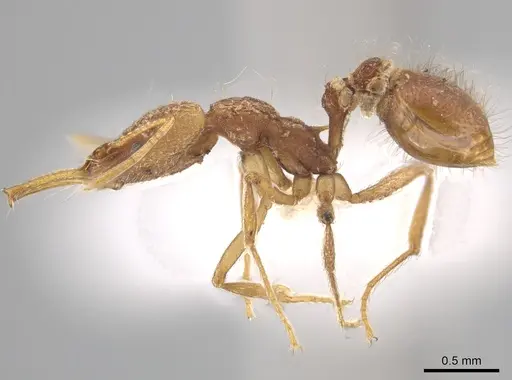
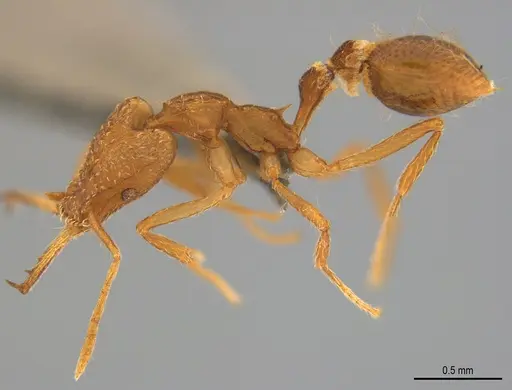
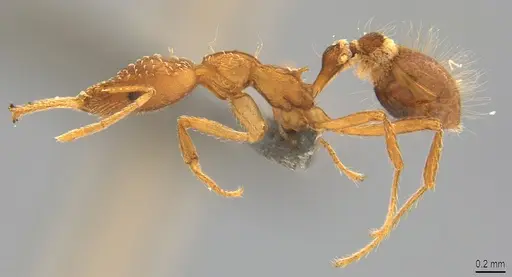
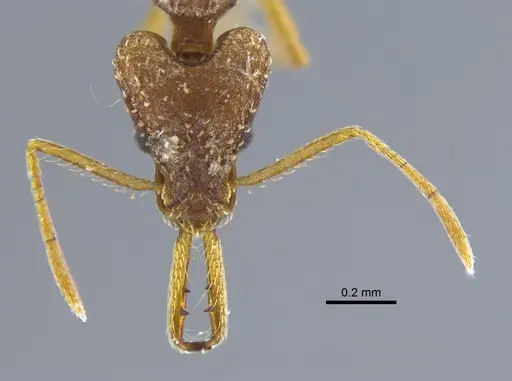
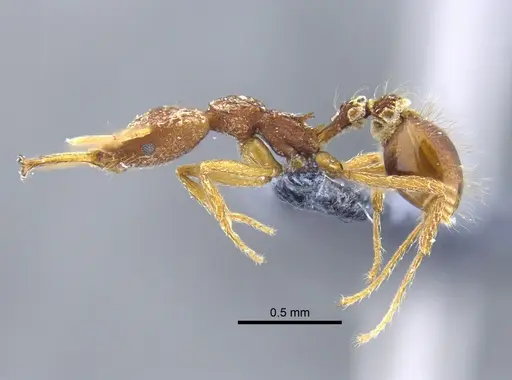
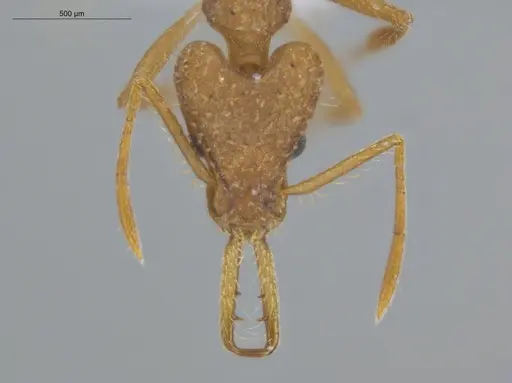
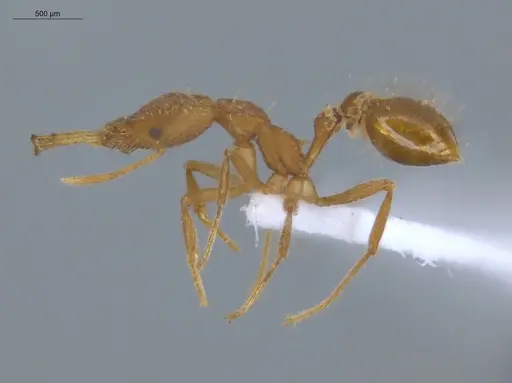
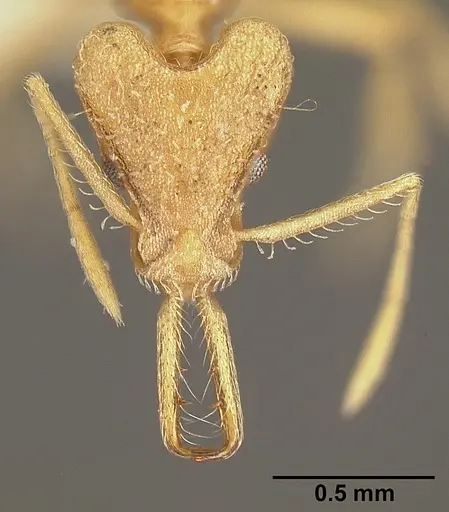
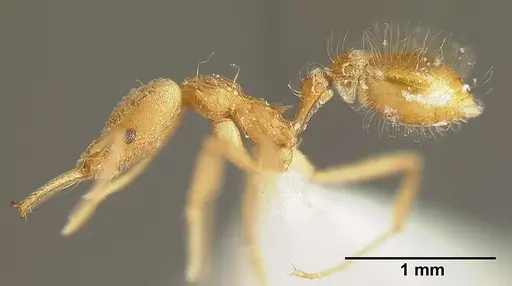
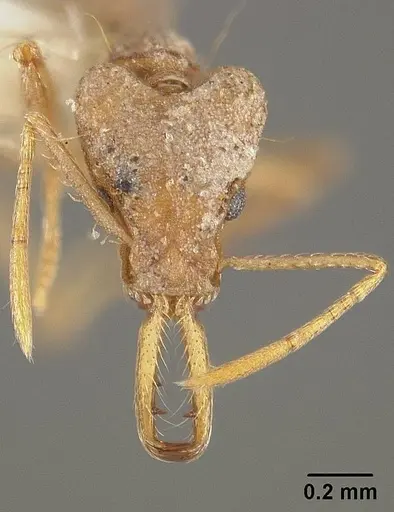
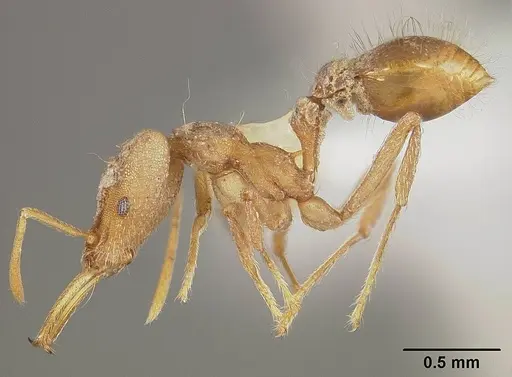
Strumigenys trinidadensis is a tiny predatory ant measuring about 3.3-3.7mm in total length . Workers have a dull yellow to brownish-yellow body, and their most striking feature is the elaborate mandible structure - a strong preapical tooth followed by smaller teeth, plus an apical fork with a single intercalary tooth . The gaster is finely sericeous, opaque, and covered with fine longitudinal striations, and the body has distinctive long, hair-like setae on the apicoscrobal area, pronotal humerus, and mesonotum . This species belongs to the Myrmicinae subfamily and the Attini tribe; though Attini includes leafcutter ants, Strumigenys are specialized predators. They occur throughout the Neotropical region from Trinidad and Costa Rica south to Brazil, Bolivia, and Peru, typically in wet forest habitats where they forage on low vegetation .
Quick Summary
- Difficulty: Expert
- Origin & Habitat: Wet forest habitats in the Neotropical region, found in Costa Rica, Panama, Colombia, Ecuador, Brazil, Bolivia, Peru, French Guiana, Nicaragua, Trinidad and Tobago [3][4][1]. They are arboreal foragers on low vegetation in tropical rainforests [3].
- Colony Type: Colony structure is unconfirmed, no specific data on queen number or colony size exists in the literature.
- Size & Growth:
- Queen: Unknown, queen measurements not documented
- Worker: 3.3-3.7mm total length [1]
- Colony: Unknown, colony size not documented
- Growth: Unknown, growth rate not studied
- Development: Unknown, development timeline not documented (No specific data available. Based on typical Strumigenys patterns, development likely takes several months, but this is an estimate.)
- Antkeeping:
- Temperature: No specific data exists. Based on their wet forest habitat across Central and South America, they likely need warm, stable temperatures in the range of 24-28°C. Start in the mid-20s and observe colony activity.
- Humidity: Based on their wet forest habitat, they require high humidity, aim for damp tropical forest floor conditions. Keep the nest substrate consistently moist but not waterlogged, with some slightly drier areas available for choice.
- Diapause: Unknown, no data on overwintering. As a tropical species, they likely do not require diapause, but this is unconfirmed.
- Nesting: No specific nesting data exists. Based on their arboreal foraging and membership in Attini, they likely nest in pre-existing cavities in rotting wood, under bark, or in leaf litter. In captivity, a small test tube setup or a small formicarium with high humidity can work.
- Behavior: Strumigenys trinidadensis is a solitary hunter [5], meaning workers hunt alone rather than in groups. They are specialized predators with mandibles adapted for catching small prey. Given their tiny size (under 4mm), escape prevention is critical, they can slip through very small gaps. They are likely quick-moving and skittish. No specific data on aggression or stinging exists, but Strumigenys are not known to be aggressive toward humans.
- Common Issues: tiny size means escapes are likely without fine mesh barriers and tight-fitting lids, lack of documented care information makes proper husbandry challenging, specialized predatory diet may be difficult to meet in captivity, high humidity requirements can lead to mold issues if ventilation is poor, solitary hunting behavior may result in slow prey capture and acceptance issues
Identification and Appearance
Strumigenys trinidadensis workers are very small, about 3.3-3.7mm in total length [1]. Their most distinctive feature is the elaborate mandible structure: a strong preapical tooth followed by one or more smaller teeth, plus an apical fork with a single intercalary tooth [1]. The body is entirely dull yellow to brownish-yellow, with the gaster not contrasting from the head and mesosoma [2]. The first gastral tergite is very finely and densely longitudinally striolate-costulate and appears opaque [2][1]. Long, hair-like setae are present on the apicoscrobal area, the pronotal humerus, and standing hairs on the mesonotum [2][1]. The propodeum has a sharp spine at the top of the declivity and a spine or long acutely triangular tooth at the base [1].
Distribution and Habitat
This species has a wide Neotropical distribution. It occurs in Trinidad (type locality), Costa Rica, Panama, Nicaragua, Colombia, Ecuador, Peru, Brazil, Bolivia, and French Guiana [3][4][1]. In Colombia, it has been recorded in Valle del Cauca, Quindío, Caquetá, Nariño, Guaviare, and Vaupés [1]. They are found in wet forest habitats, documented as arboreal foragers on low vegetation in Costa Rica [3]. In the Amazon basin, they have been found in both dense and open ombrophylous forest types [6]. Research from a colonization experiment suggests they may be rare or patchy in leaf litter, with only one colony found in a year-long study [7]. They were also recorded in Peru (Madre de Dios) [8] and in Guyana as a new record [2].
Feeding and Diet
Strumigenys trinidadensis is a solitary hunter [5], meaning they hunt alone rather than coordinating attacks with nestmates. Like other Strumigenys, they are specialized predators that likely target tiny arthropods such as springtails, mites, and other micro-arthropods in leaf litter. Their mandible structure is adapted for catching small, soft-bodied prey. In captivity, offer small live prey like springtails, fruit fly larvae, newly hatched pinhead crickets, or tiny isopods. Sugar sources are unlikely to be accepted, they are not honeydew feeders. Feed small prey every few days and remove uneaten items after 24-48 hours.
Temperature and Care
No specific temperature requirements have been documented. Based on their wet forest habitat across Central and South America, they likely need warm, stable temperatures around 24-28°C. This matches typical conditions for Neotropical forest ants. Avoid temperature extremes and drafts. If room temperature is too low, use a heating cable on one side of the nest (place it on top, not underneath, to avoid drying out the substrate too quickly). Monitor colony behavior, if workers seem sluggish or cluster together, adjust temperature.
Humidity and Nesting
Based on their wet forest habitat, Strumigenys trinidadensis requires high humidity, think damp tropical forest floor conditions. Keep the nest substrate consistently moist but not waterlogged. It should feel damp to the touch with no standing water. Provide some slightly drier areas so the ants can choose their preferred humidity. Good ventilation is essential to prevent mold while maintaining humidity. Avoid stagnant air (causes mold) and excessive airflow (dries out the nest). For nesting, there is no specific data, but based on their arboreal foraging and membership in Attini, they likely nest in pre-existing cavities in rotting wood, under bark, or in leaf litter. In captivity, a small test tube setup or a small formicarium with high humidity works. Do not use acrylic nests, as they tend to be too dry for high-humidity species. [3]
Behavior and Temperament
These ants are solitary hunters [5], meaning they forage alone. They are not aggressive toward humans and likely have a very small stinger. Given their tiny size (under 4mm), they are probably quick-moving and may be skittish when disturbed. Escape prevention is critical, use fine mesh (0.5mm or smaller) on ventilation holes, ensure tight-fitting lids, and consider barrier products like fluon. Do not underestimate their ability to find gaps. Research indicates they can be rare in surveys, appearing in only 10% of plots in a two-year study [9], suggesting colonies may be small or patchily distributed.
Frequently Asked Questions
How long does it take for Strumigenys trinidadensis to develop from egg to worker?
The development timeline has not been documented for this species. Based on patterns in related Myrmicinae ants, expect several months. Without specific data, observe your colony and adjust conditions accordingly.
What do Strumigenys trinidadensis ants eat?
As solitary hunters [5], they are specialized predators that target tiny arthropods. In captivity, offer small live prey such as springtails, fruit fly larvae, tiny isopods, or newly hatched pinhead crickets. They are unlikely to accept sugar sources or dead prey. Remove uneaten prey after 24-48 hours.
Can I keep Strumigenys trinidadensis in a test tube?
Yes, a test tube setup is appropriate for this tiny species. Ensure the test tube is properly sealed and use fine mesh on any ventilation. Given their high humidity needs, a test tube with a water reservoir can maintain moisture. Because they are arboreal foragers, you may need to provide foraging space beyond just the test tube.
Are Strumigenys trinidadensis ants good for beginners?
No, this species is not recommended for beginners. There is very little documented care information, they require high humidity and warm temperatures, their tiny size makes escape prevention challenging, and their specialized diet can be difficult to meet. They are best suited for experienced keepers.
What temperature should I keep Strumigenys trinidadensis at?
No specific temperature data exists. Based on their wet forest habitat, aim for 24-28°C. Start in the mid-20s and observe colony activity. Avoid temperature extremes and sudden changes.
How big do Strumigenys trinidadensis colonies get?
Colony size has not been documented. Based on typical Strumigenys patterns, colonies are likely small (possibly under 100 workers), but this is an estimate.
Do Strumigenys trinidadensis need hibernation or diapause?
As a tropical species from wet forests in Central and South America, they likely do not require diapause. However, this has not been confirmed. Maintain stable warm temperatures year-round.
Why are my Strumigenys trinidadensis dying?
Without documented care info, diagnosing problems is hard. Common issues likely include: temperature too low, humidity too low, escape through gaps, starvation from lack of small live prey, or mold from poor ventilation. Review all parameters and ensure secure containment.
When should I move my colony to a formicarium?
No specific guidance exists. As a rule, wait until the colony is established and actively foraging. A small test tube can house them for a long time. Only move to a formicarium if the colony outgrows the test tube and you can maintain proper humidity.
Report an Issue
The current care sheet is based fully on literature. See inconsistencies, or something that's incorrect? Please , it will be resolved after review from an admin. Contributing to the blogs tab also helps providing information, to make us be able to further improve the caresheets. Thank you for your support!
References

This caresheet is licensed under CC BY-SA 4.0 .
Community Blogs
CASENT0628792
View on AntWeb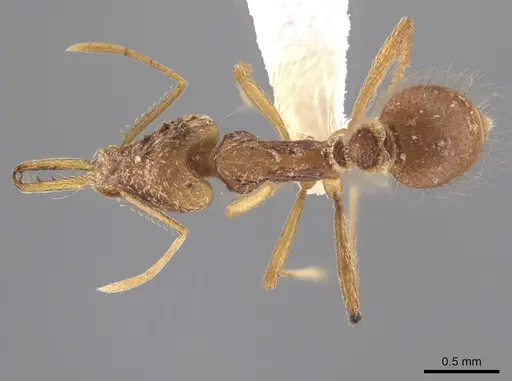
CASENT4036193
View on AntWeb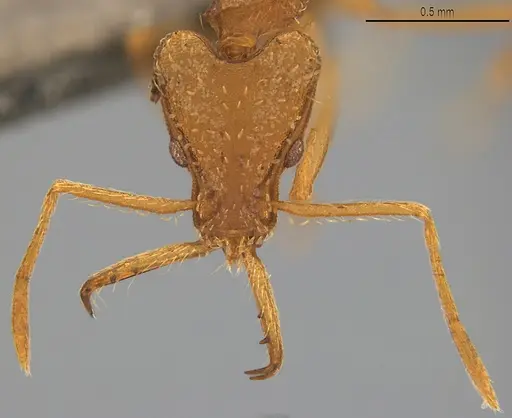
CASENT4036224
View on AntWeb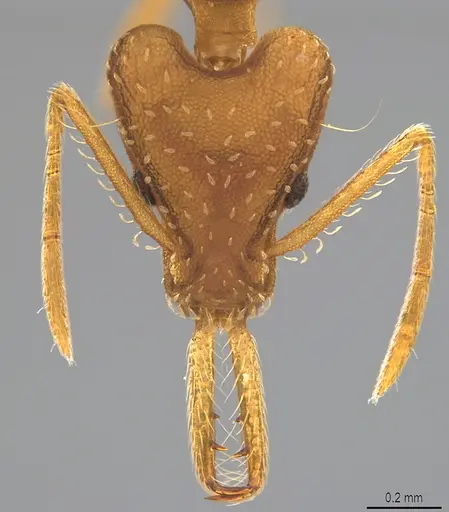
CBUMAGENT41698
View on AntWeb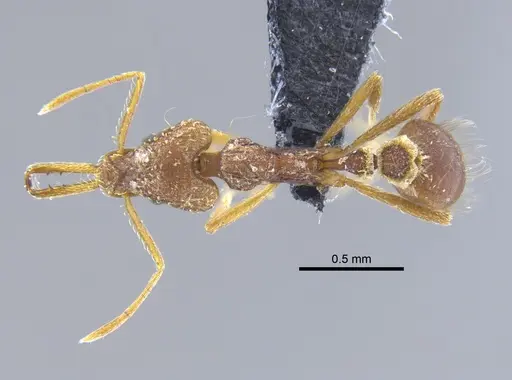
ECOFOG-IT14-0099-76
View on AntWeb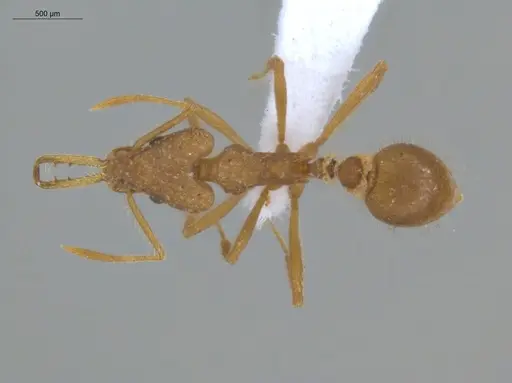
INBIOCRI001280404
View on AntWeb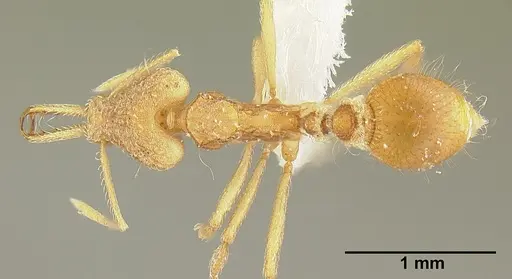
USNMENT00441644
View on AntWeb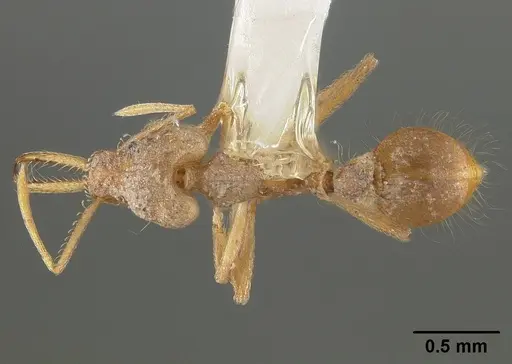
Literature
Loading distribution map...Loading products...