
Wadeura pauli
- Sci. Name
- Wadeura pauli
- Tribe
- Ponerini
- Subfamily
- Ponerinae
- Author
- Fernandes & Delabie, 2019
- Distribution
- Found in 0 countries
Introduction
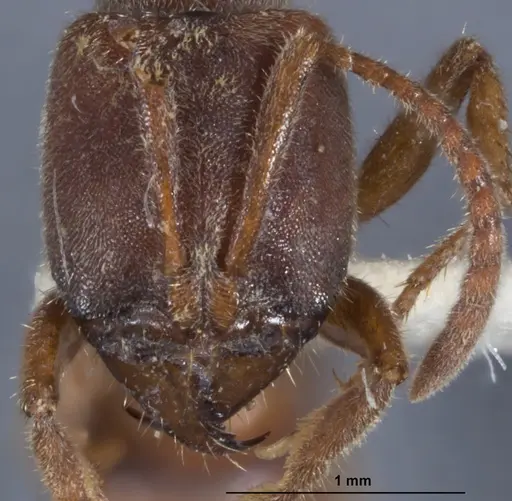
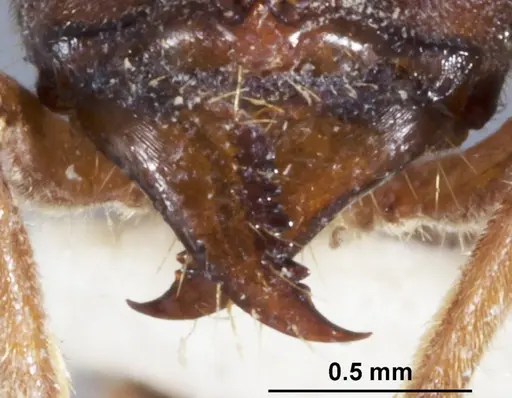
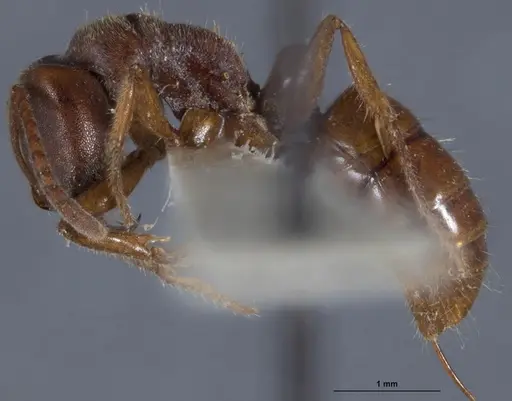
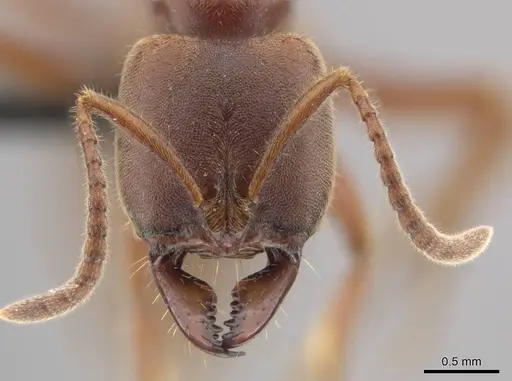
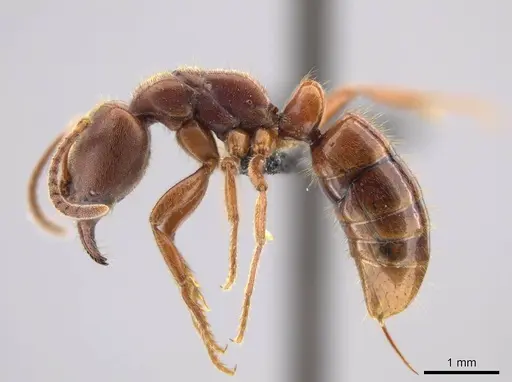
Wadeura pauli is a large Ponerine ant species from the Amazon rainforest. Originally described as *Cryptopone pauli* in 2019,it was reclassified into the genus *Wadeura* in 2022 . Workers are impressively sized at over 7mm total length, making this the largest species in its genus . They have a brown body, dense golden hairs, elongated triangular mandibles with seven teeth, and a long, sharp, upcurved sting . The eyes are tiny - just 6-7 facets - suggesting an underground lifestyle . The queen and male have never been found; the sole sequenced specimen has tiny eyes that hint at an ergatoid (wingless) queen . Only six specimens are known: the type series from Rondônia, Brazil, plus individuals from Pará (Brazil), Colombia, and Guyana .
Quick Summary
- Difficulty: Expert
- Origin & Habitat: Amazon region of Brazil (Rondônia, Pará) and Colombia. Collected from soil samples in tropical forest environments [1].
- Colony Type: Unknown, queen and male remain undescribed. A sequenced worker with tiny compound eyes may actually be an ergatoid queen, but this is unconfirmed [2].
- Size & Growth:
- Antkeeping:
- Temperature: Based on its Amazon origin, this species likely needs warm conditions around 24-28°C. No direct thermal studies exist [1].
- Humidity: Based on its Amazon rainforest origin, this species likely needs high humidity (70-85%) similar to other Ponerine ants. Keep substrate consistently moist but not waterlogged [1].
- Diapause: Unknown, no seasonal data available. Amazon species may not enter true diapause but could show reduced activity during cooler or drier periods.
- Nesting: Collected from soil samples, likely nests in soil or under stones in humid forest floor environments. A naturalistic setup with moist substrate or a Y-tong/plaster nest would be appropriate.
- Behavior: No behavioral studies exist for this species. As a Ponerine ant, it possesses a functional stinger and is likely predatory on small invertebrates. Its rudimentary eyes suggest it may be more secretive or subterranean than surface-active ants. Exercise caution when handling due to its potent sting.
- Common Issues: This species is virtually unknown in the antkeeping hobby, availability is extremely limited, No established care protocols exist, all husbandry would be experimental, Queen and colony structure unknown makes captive breeding extremely challenging, Wild-caught colonies may carry parasites or diseases with no documented treatment, Large size and potent sting require careful handling
Species Discovery and Taxonomy
Wadeura pauli was originally described as Wadeura pauli in 2019 by Fernandes and Delabie from specimens collected in Rondônia, Brazil [1]. The species was named to honor Paulo Vilela Cruz, the husband of the first author, who studies mayflies rather than ants [1]. In 2022,Branstetter and Longino reclassified the species to the genus Wadeura based on genetic analysis, noting it as the largest species in the genus [2]. The species is known from only six specimens worldwide: the holotype and three paratypes from Rondônia, a sequenced specimen from Guyana, and a specimen from Rio Trombetas in Pará, Brazil [1]. This extreme rarity makes captive specimens essentially nonexistent in the antkeeping hobby.
Identification and Physical Features
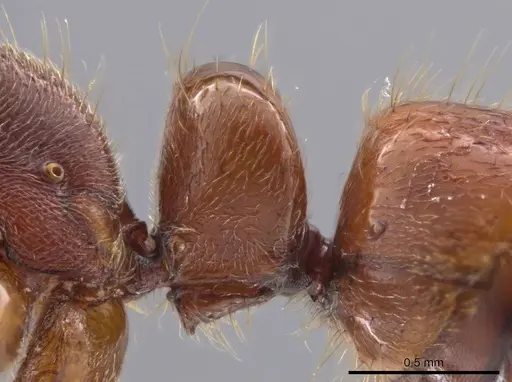
Workers are large at 7.05-7.11mm total length, making this the largest species in the genus Wadeura [1]. They have a brown body covered with dense golden pubescence and long suberect golden hairs on the head and clypeus [1]. The mandibles are elongated and triangular with 7 teeth along the masticatory margin, with the apical tooth being large and acute [1]. A distinctive feature is the rudimentary eye with only 6-7 facets, suggesting adaptation to low-light or subterranean environments [1]. The petiole is robustly subrectangular, and the gaster is mostly cylindrical [1]. Most notably, they possess a long, sharp, upcurved sting, a characteristic feature of Ponerinae ants that makes them capable of delivering painful stings [1].
Distribution and Habitat
Wadeura pauli is known from the Amazon region of South America, with confirmed records from Brazil (Rondônia and Pará states) and Colombia, plus a sequenced specimen from Guyana [1]. The type locality is Floresta Nacional do Jamari in Rondônia, Brazil, where the holotype and paratypes were collected from soil samples in May 2018 [1]. This indicates they nest in soil in humid tropical forest environments. The limited distribution and few specimens suggest this is either a rare species or one that is difficult to collect due to its cryptic habits. The rudimentary eyes strongly suggest they are adapted to dark microhabitats, likely living underground or in deeply shaded forest floor environments.
Keeping Considerations
This species is NOT recommended for antkeepers due to its extreme rarity and complete lack of established care protocols. No captive colonies are known to exist in the hobby, and the queen has never been described, making captive breeding impossible from current knowledge [1]. If specimens were to become available, care would need to be extrapolated from related Ponerine ants, likely requiring high humidity (70-85%), warm temperatures (24-28°C), and a naturalistic setup with moist soil substrate. As Ponerines, they possess a functional stinger and should be handled with extreme caution. The large size (7mm+) means they would require appropriately sized enclosures with secure escape prevention. Any successful keeping would represent a significant contribution to our knowledge of this species.
Frequently Asked Questions
Is Wadeura pauli available in the antkeeping hobby?
No. This species is virtually unknown in the antkeeping hobby. Only 6 specimens have ever been collected by scientists, and no queen or colony has ever been described. Captive specimens do not exist.
What does Wadeura pauli look like?
Workers are large at over 7mm, brown in color, with distinctive golden hairs covering the body. They have elongated triangular mandibles with 7 teeth and a long, sharp, upcurved sting. Their most unusual feature is the rudimentary eye with only 6-7 facets.
Where does Wadeura pauli live?
This is an Amazon species known from Brazil (Rondônia and Pará states), Colombia, and Guyana. They are collected from soil samples in tropical forest environments, suggesting they nest in soil in humid, shaded microhabitats.
Can I keep Wadeura pauli as a pet?
No. This species is not available in the antkeeping hobby and no captive breeding protocols exist. The queen has never been described, making it impossible to establish colonies. Even if specimens were found, they would be of significant scientific interest and should not be kept as pets.
Does Wadeura pauli have a sting?
Yes. As a member of the subfamily Ponerinae, they possess a functional stinger that is described as long, sharp, and upcurved [1]. Exercise extreme caution when handling any Ponerine ant.
How big do Wadeura pauli workers get?
Workers are 7.05-7.11mm in total length, making this the largest species in the genus Wadeura [1].
What do we know about Wadeura pauli colony structure?
Almost nothing. The queen and male have never been described, and colony size is unknown. Only 6 worker specimens exist in scientific collections. The sequenced specimen shows tiny eyes, suggesting ergatoid (wingless) queens may exist, but this is unconfirmed [2].
Is Wadeura pauli related to Cryptopone?
Yes. It was originally described as Wadeura pauli in 2019 but was reclassified to the genus Wadeura in 2022 based on genetic analysis [2].
Why are the eyes so small on Wadeura pauli?
The rudimentary eyes with only 6-7 facets suggest adaptation to dark environments. This is common in ants that live underground or in deeply shaded forest floor habitats where vision is not essential for survival.
What is the difficulty level for keeping Wadeura pauli?
Expert/Impossible. This species is not available in the hobby, has no described queen, and no captive care information exists. Even experienced antkeepers would have no foundation for establishing a colony of this species.
Report an Issue
The current care sheet is based fully on literature. See inconsistencies, or something that's incorrect? Please , it will be resolved after review from an admin. Contributing to the blogs tab also helps providing information, to make us be able to further improve the caresheets. Thank you for your support!
References

This caresheet is licensed under CC BY-SA 4.0 .
Community Blogs
ANTWEB1041391
View on AntWeb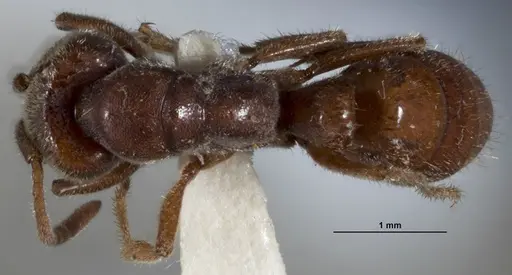
CASENT0637806
View on AntWeb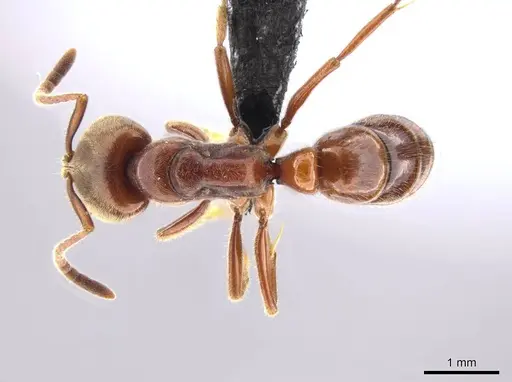
Literature
Loading distribution map...Loading products...