Odontoponera denticulata shows a January to November activity window. Peak activity occurs in May, with queen sightings distributed across 10 months. This extended season suggests multiple flight events or varying conditions across its range.
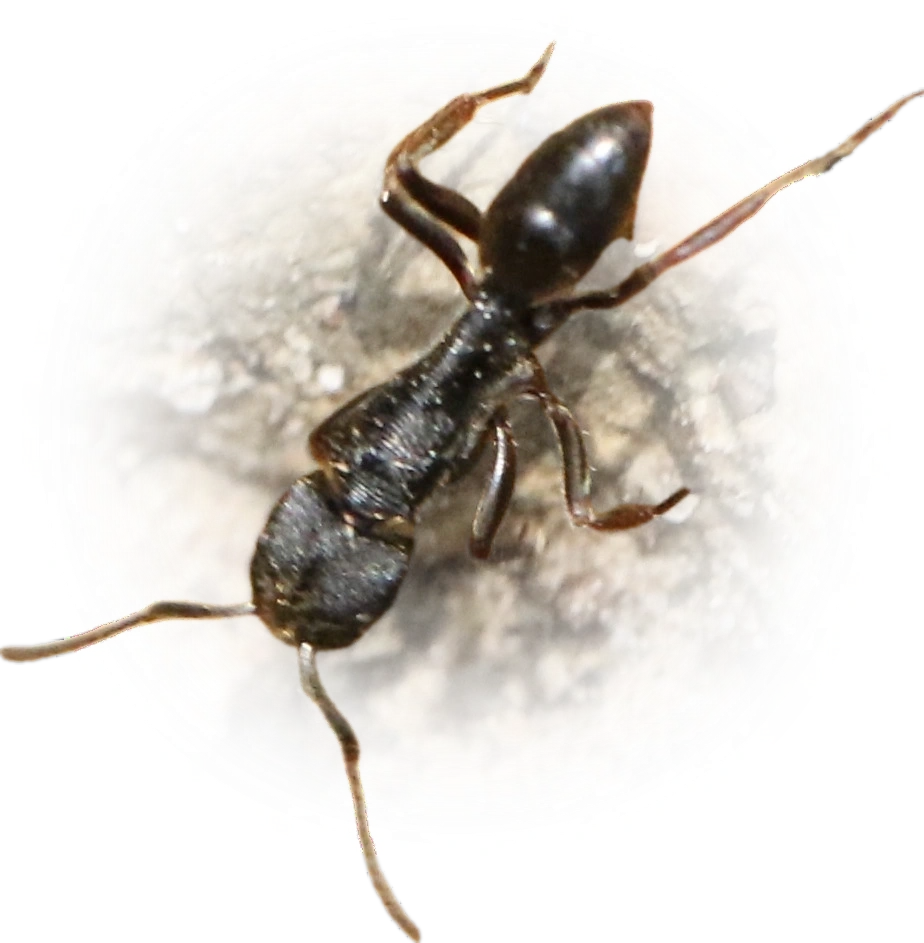
Odontoponera denticulata
- Sci. Name
- Odontoponera denticulata
- Tribe
- Ponerini
- Subfamily
- Ponerinae
- Author
- Smith, 1858
- Distribution
- Found in 11 countries
- Queen Activity
- From January to December
- Peak Time
- 10:00
AI Identifiable
try →
Introduction
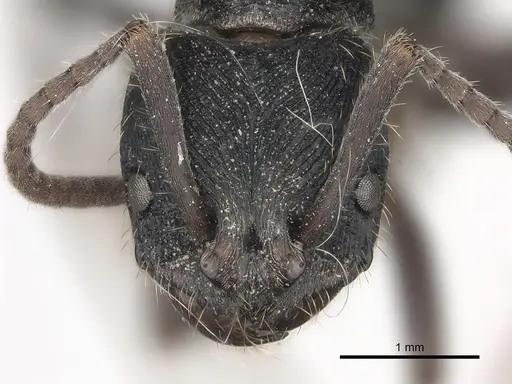
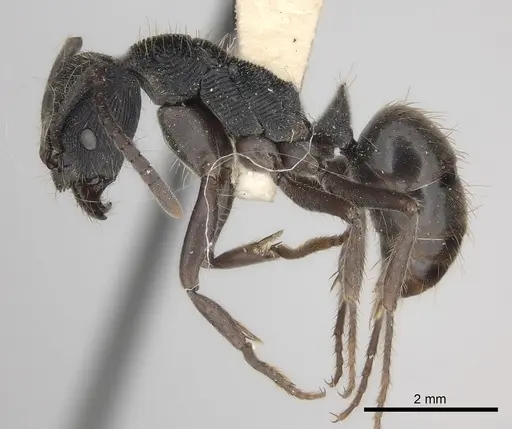
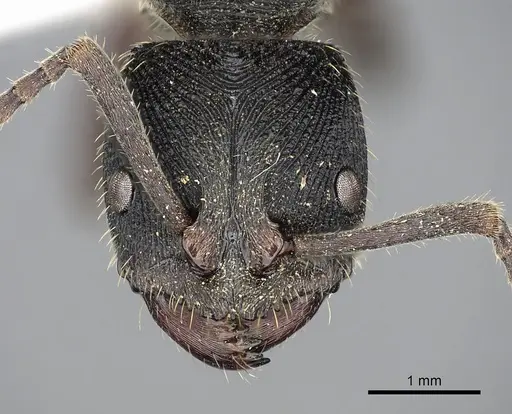
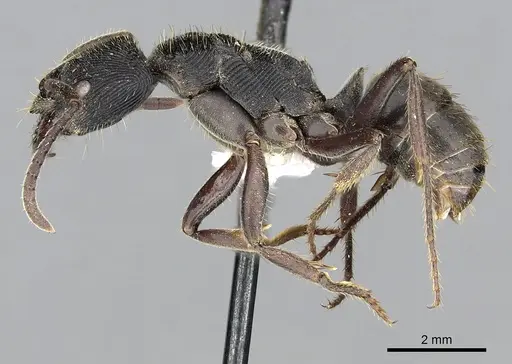
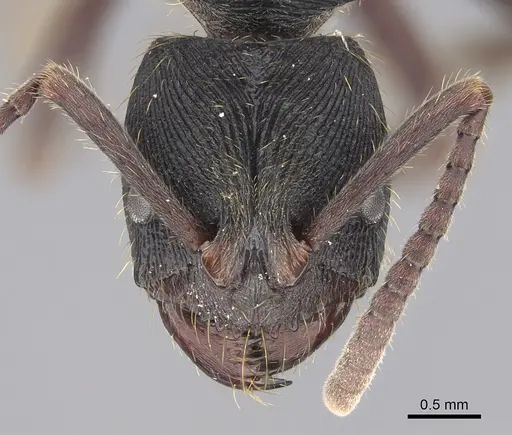
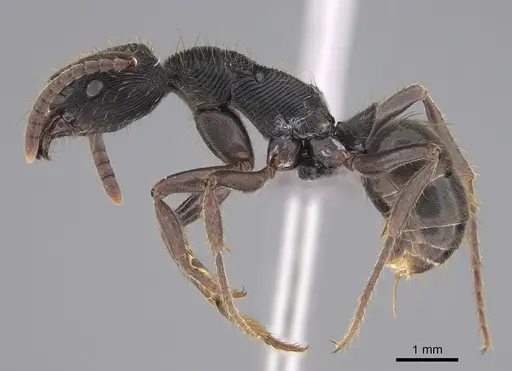
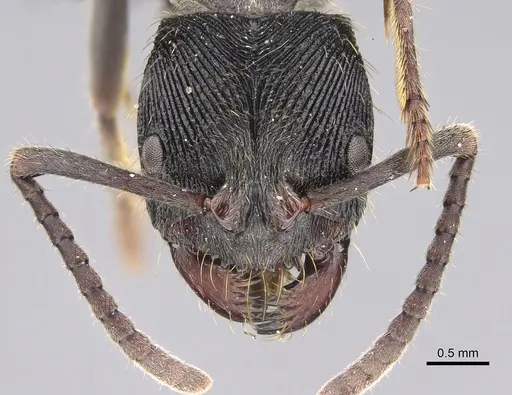
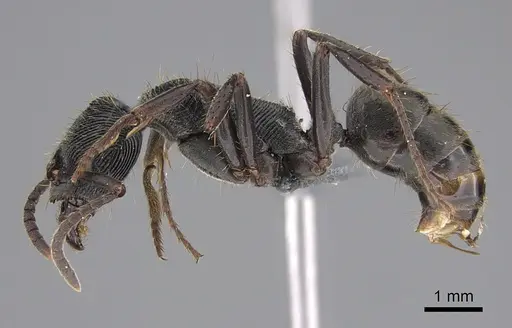
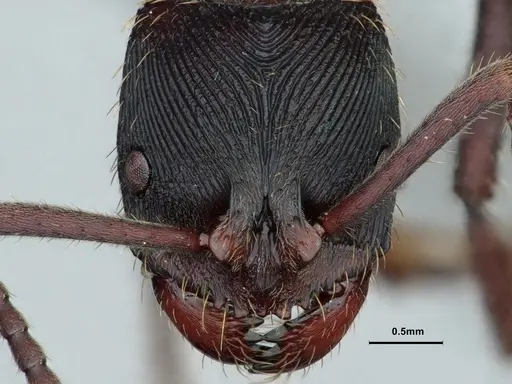
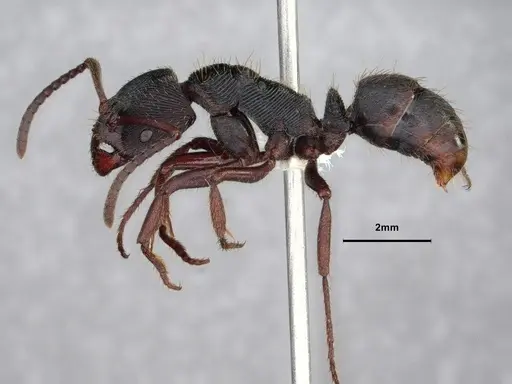
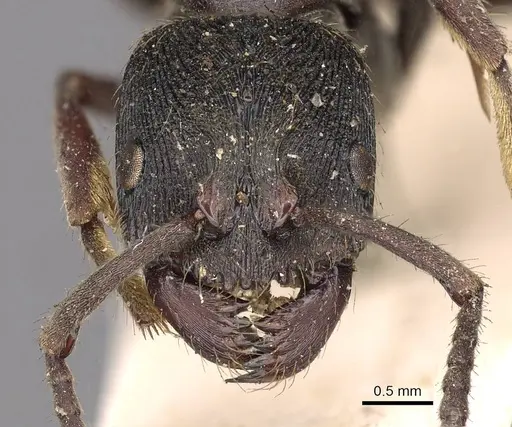
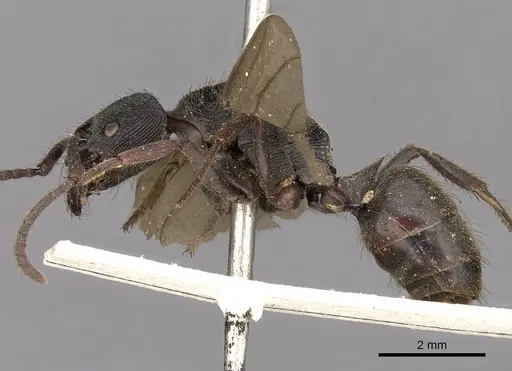
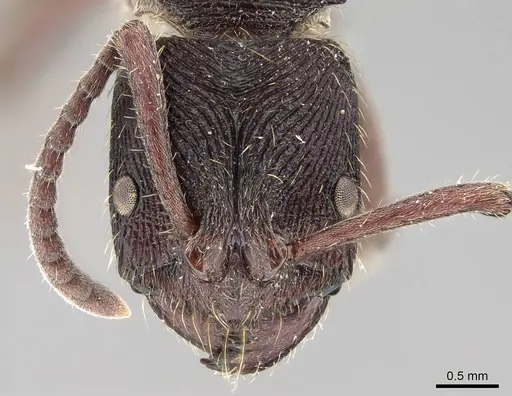
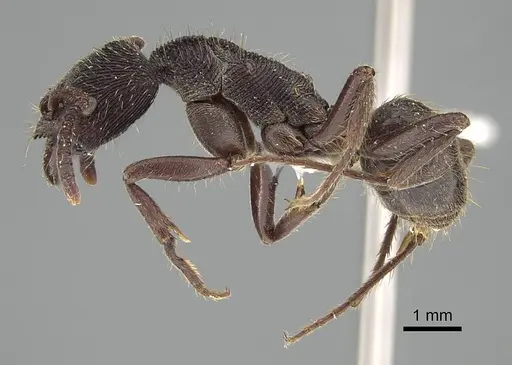
Odontoponera denticulata is a medium-sized ponerine ant native to South and Southeast Asia . Workers measure 9-11mm and have a dark brown to black body with reddish-brown legs and antennae . Key features include eight teeth on the clypeal margin, five teeth on each mandible, and a deeply notched petiole . The head and mesosoma have strong rugae . This species was long confused with Odontoponera transversa until clarified in 2009 . It thrives in disturbed areas like cleared land and agricultural fields, making it common across its range .
Quick Summary
- Difficulty: Medium
- Origin & Habitat: Native to South and Southeast Asia including Bangladesh, India, Nepal, Pakistan, Thailand, Laos, Vietnam, Malaysia, Indonesia, the Philippines, and southern China up to 1500m elevation. Prefers disturbed areas with bare ground, secondary forests, forest edges, and agricultural land [2][4][1].
- Colony Type: Based on Odontoponera patterns, likely monogyne (single queen) colonies. Workers lay trophic eggs for queen nutrition [5].
- Size & Growth:
- Antkeeping:
- Temperature: Keep warm and stable, roughly 24-28°C, based on tropical habitat
- Humidity: Keep substrate consistently moist but not waterlogged, as they prefer areas with soil moisture [4]
- Diapause: No, this is a tropical species that does not require hibernation
- Nesting: Natural nests are in soil, provide a damp substrate for nesting and a ground-level outworld [6]
- Behavior: Workers are aggressive hunters that forage alone on the ground surface within about a meter of the nest [7][1]. They have a functional sting for defense and subduing prey [1]. Colonies are moderately defensive. Escape risk is moderate due to their size, but ensure good barriers [8].
- Common Issues: colonies may fail if kept too dry, they need consistent substrate moisture, slow founding stage, new queens can take months to establish first workers, predatory nature means they need live or fresh protein regularly, queens may eat trophic eggs offered by workers, this is normal behavior, wild-caught colonies may have parasites that can decimate the colony
Queen Ant Activity Analysis 76 observations
Queen Activity by Hour 76 observations
Odontoponera denticulata queen activity peaks around 10:00 during the late morning to early afternoon. Activity is spread across a 22-hour window (00:00–21:00). Times may be influenced by human observation patterns.
Housing and Nest Setup
Odontoponera denticulata nests in soil in the wild, so a naturalistic setup with a soil chamber works best. You can use a Y-tong nest with a dirt chamber, or a plaster nest with a water reservoir to maintain humidity. Keep the nesting area consistently moist but not soggy. Provide a water tube and a simple outworld area with substrate for foraging. Use escape prevention like fluon on the rim [6][4].
Feeding and Diet
This species is a predator and scavenger. In the wild, they hunt small arthropods including other ants, spiders, and insects [1]. In captivity, offer live or freshly killed insects such as fruit flies, small crickets, and mealworms. Protein should be available at least twice weekly. Trophic eggs are sometimes laid by workers in established colonies, workers produce these eggs specifically for the queen to eat [5].
Temperature and Seasonal Care
As a tropical species, Odontoponera denticulata prefers warm temperatures. Keep the nest area at 24-28°C for optimal colony health. They do not require hibernation and remain active year-round. Room temperature in most homes is generally acceptable, but warmer conditions will result in more active colonies [4][8].
Behavior and Defense
Workers are aggressive hunters that forage alone on the ground surface, typically within a meter of their nest entrance [7]. They have a functional sting that they use to subdue prey and defend the colony [1]. Colonies are moderately sized and not supercolonial, each nest has a single queen, but they have a high ability to form supercolonies [9].
Growth and Development
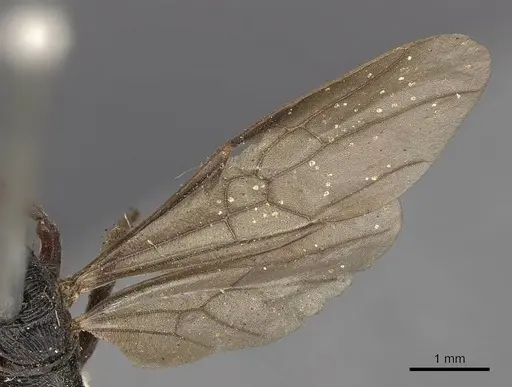
Colonies in the wild contain approximately 60-110 workers in natural soil nests [1], though captive colonies can grow larger, up to 1200 workers [5]. The queen is 10-11mm while workers are 9-11mm. Development from egg to worker is estimated at 6-10 weeks based on related Ponerinae species. New colonies start slowly, the founding queen must establish a nest and raise her first workers alone, which can take several months [1][5].
Distinguishing from Similar Species
Odontoponera denticulata was long confused with Odontoponera transversa. The two species overlap in range but have different habitat preferences: O. denticulata prefers disturbed, open areas while O. transversa prefers primary forest [2]. To distinguish workers: O. denticulata has a darker body, shorter antenna scape, and a poorly defined raised area on the vertex [3]. This species is the only Odontoponera found in India [1].
Frequently Asked Questions
How long does it take for Odontoponera denticulata to have first workers?
Estimated 6-10 weeks from egg to first worker at optimal temperatures (24-28°C). Founding queens may take several months to establish their first workers, so patience is needed during the founding stage.
Can I keep Odontoponera denticulata in a test tube?
While test tubes can work for founding, this species prefers soil nests. A naturalistic setup with a dirt chamber or Y-tong nest with substrate is more suitable [6].
What do Odontoponera denticulata eat?
They are predators, feed them live or freshly killed insects like fruit flies, small crickets, and mealworms [1]. Protein should be offered at least twice weekly [4].
Are Odontoponera denticulata good for beginners?
They are rated as medium difficulty. They require more specific care than some common ants because they need live protein prey and consistent humidity. They are not the best choice for complete beginners.
Do Odontoponera denticulata need hibernation?
No, they are a tropical species and do not require hibernation. Keep them at warm temperatures year-round.
How big do Odontoponera denticulata colonies get?
Wild colonies typically have 60-110 workers, but in captivity they can grow up to 1200 workers with good care [1][5].
Why is my queen eating eggs in the colony?
This is normal behavior! Workers lay trophic eggs, special nutritional eggs meant for the queen to eat. The queen may eat them completely or partially before discarding them [5].
When should I move Odontoponera denticulata to a formicarium?
Wait until the colony has at least 20-30 workers before moving to a larger setup. For founding colonies, keep them in a simple setup until they establish.
What's the difference between Odontoponera denticulata and Odontoponera transversa?
O. denticulata prefers disturbed, open areas and has a darker body, while O. transversa prefers primary forest [2]. O. denticulata has a shorter antenna scape and less defined vertex raised area [3].
When do Odontoponera denticulata queens forage?
Queen activity of Odontoponera denticulata typically occurs From January to December. Times may be influenced by human observation patterns.
What time of day are Odontoponera denticulata queens most active?
Queen activity of Odontoponera denticulata peaks around 10:00 during the late morning to early afternoon, with most activity between 00:00 and 21:00. Times may be influenced by human observation patterns.
Report an Issue
The current care sheet is based fully on literature. See inconsistencies, or something that's incorrect? Please , it will be resolved after review from an admin. Contributing to the blogs tab also helps providing information, to make us be able to further improve the caresheets. Thank you for your support!
References

This caresheet is licensed under CC BY-SA 4.0 .
Community Blogs
CASENT0217548
View on AntWeb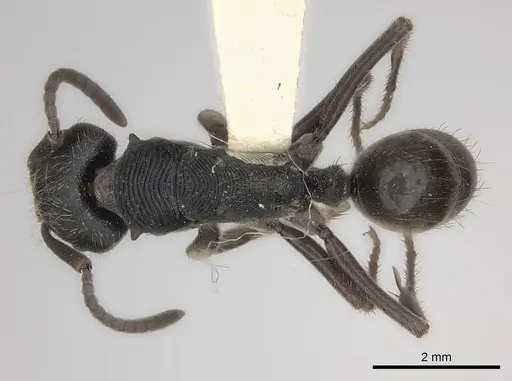
CASENT0249125
View on AntWeb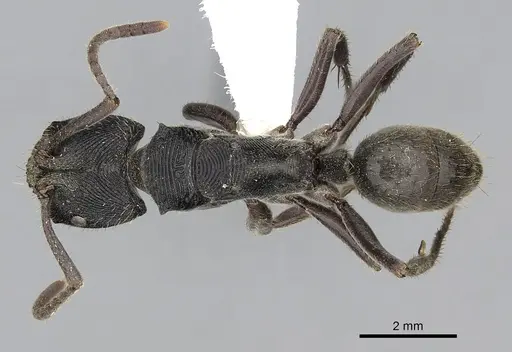
CASENT0267032
View on AntWeb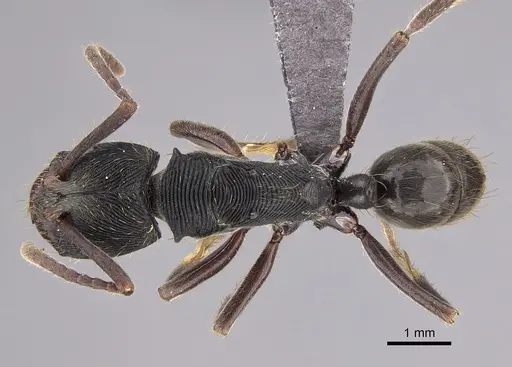
CASENT0287102
View on AntWeb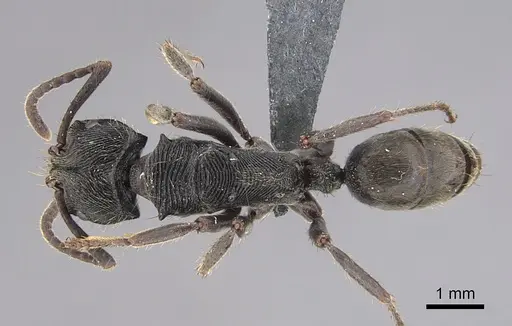
CASENT0886860
View on AntWeb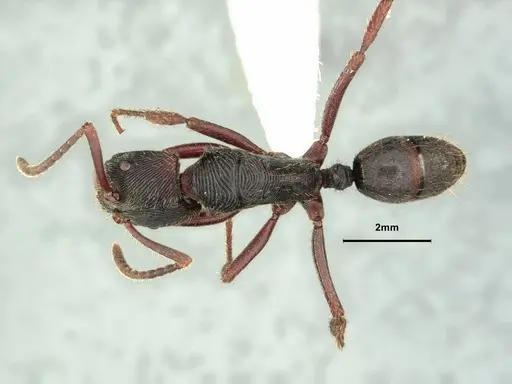
CASENT0900664
View on AntWeb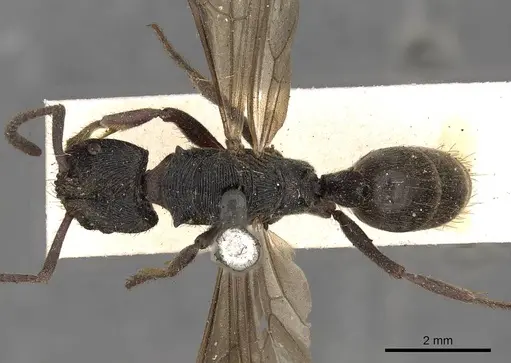
CASENT0919898
View on AntWeb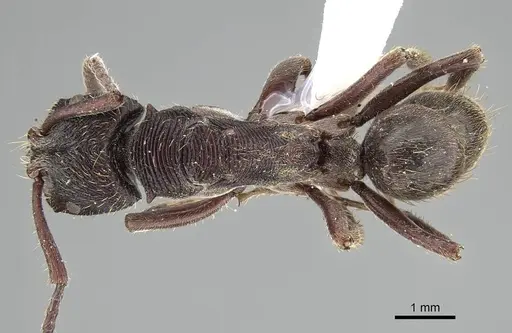
Literature
Loading distribution map...Loading products...